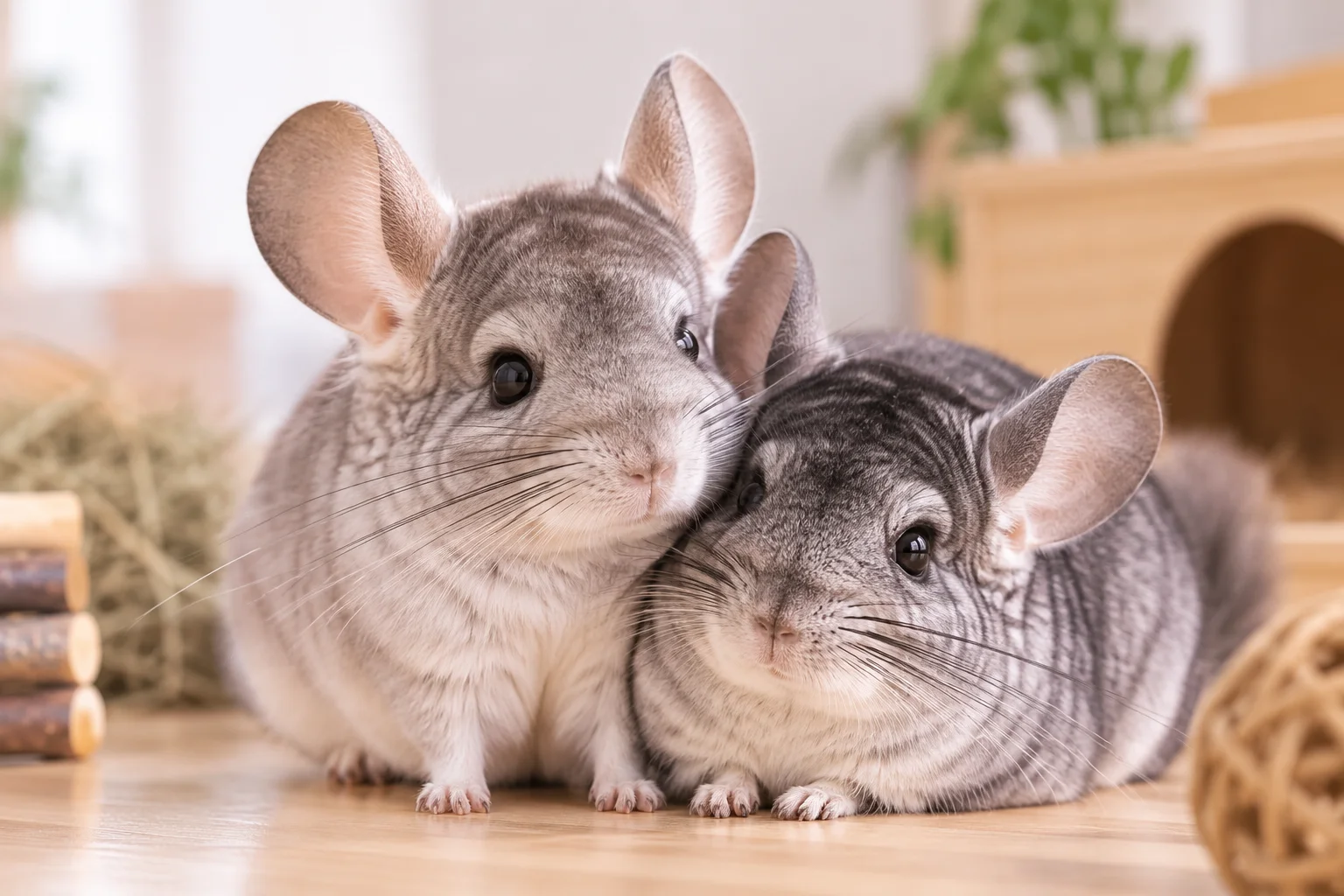
Chinchillas are cute and adorable, but they require specific care and need. Let’s learn how you can provide a comfortable home for your pet chinchilla!
Socialisation
- Chinchillas are naturally social animals that live in large groups in the wild. A single chinchilla will need lots of daily attention, so it’s often better to keep two or more of the same gender to keep them company.
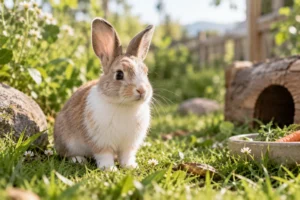
- They should not be housed with other animal species, especially not rabbits. Rabbits can carry a bacteria called Pasteurella, which can be deadly to chinchillas.
- Chinchillas need gentle daily care and interaction, so they’re not suitable for people who travel often or are away from home frequently.
- Because chinchillas are delicate and very quick, they are not ideal pets for young children to care for on their own.
- Children should always be supervised by an adult when handling or playing with a chinchilla.
Enclosure
- House your chinchilla in an area where you spend a lot of time, like your living room so they feel part of the family.
- Avoid direct sunlight or a drafty area as chinchillas are very sensitive to heat (due to their dense coat and lack of sweat glands to cool their body down). They need to stay in a temperature-controlled space between 16–20°C. They are very sensitive to temperature above 21°C. Keep humidity low; below 40–50%.
- Chinchillas love to get vertical! Choose a spacious, multi-level cage, with multiple tiers, ramps, and shelves for climbing & playing.
- Ensure between levels are no more than 40cm as chinchillas can fall and injure themselves.
- The wire sides should not be more than 1 inch apart and choose solid floor to prevent pressure sores on their feet.
- A single chinchilla requires a minimum enclosure of 60 x 60 x 90 cm but the bigger, the better!
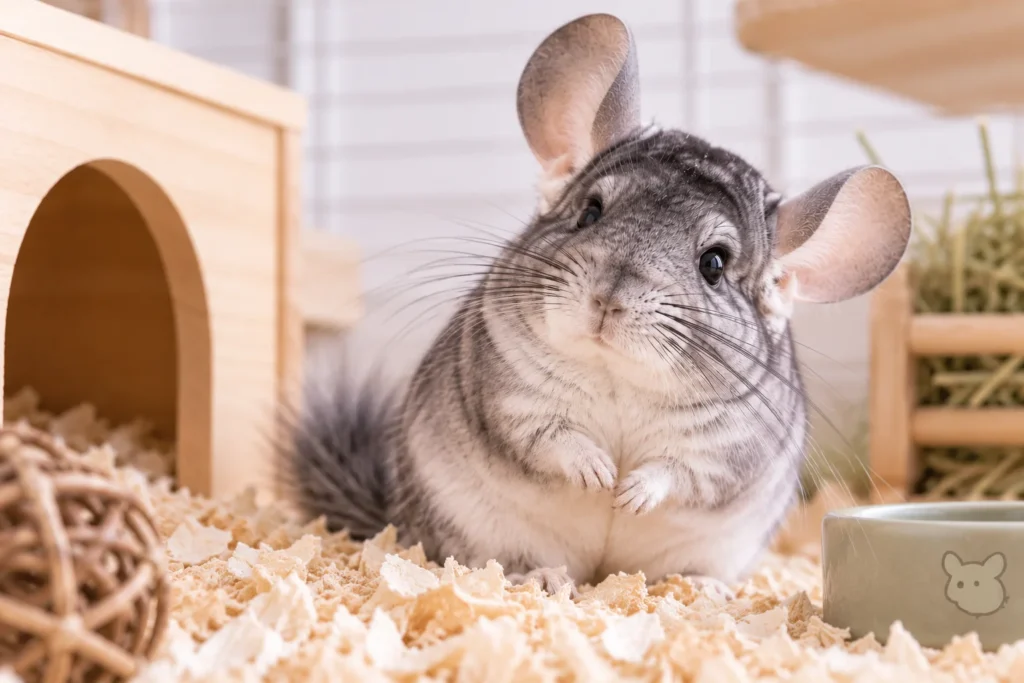
- Your chinchilla’s home should include a hideout with plenty of space to rest, bedding and chews.
- The habitat must be free from any plastic (eg shelves, bowls, toys) – if a chinchilla chews this, it can cause fatal internal blockages. Please do not be fooled by claims such as “hard, durable plastic”.
Bedding
Good options would be:
- Non-pill fleece bedding
- Wood shavings eg aspen or kiln dried
Avoid:
- Pine or cedar shavings: toxic, may cause respiratory disease
- Scented beddings: chinchillas are very sensitive to smell
Hygiene
Enclosure Cleaning
- The cage should be spot cleaned daily to remove feces, wet/soiled bedding, and leftover food.
- Food and water bowls should also be cleaned daily with soap and water.
- Bedding should be replaced weekly.
- Cages should be emptied and cleaned at least weekly with soap and water.
Grooming
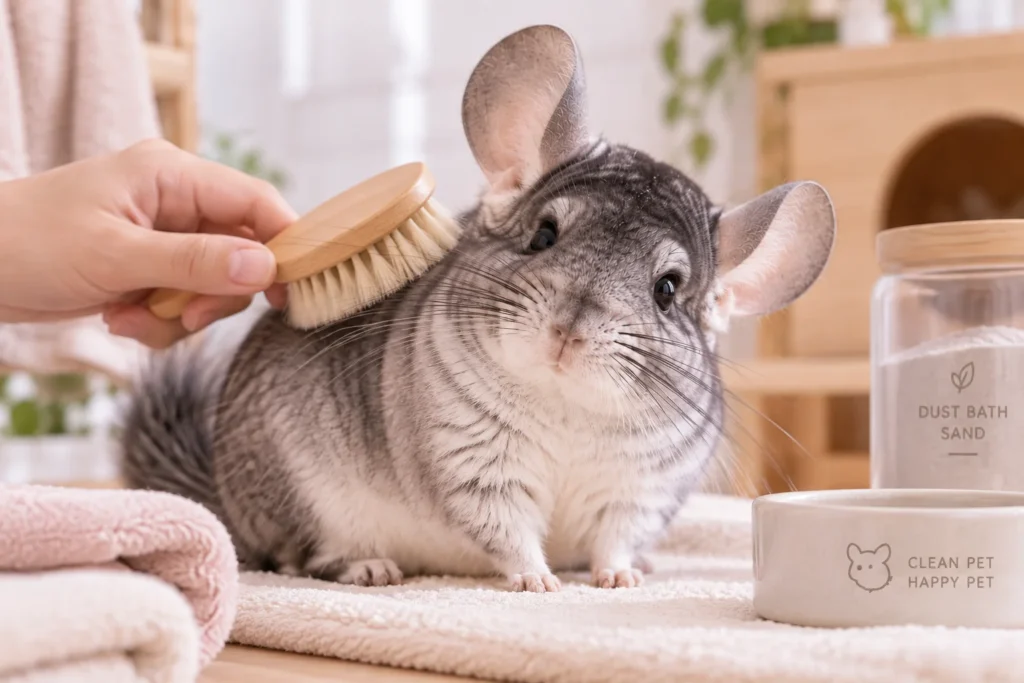
- Chinchillas should be brushed with a soft-bristled brush in the direction of their fur.
- Do not bathe your chinchilla or get them wet because their fur takes a while to dry, and the skin can become inflamed.
- Chinchillas require dust/sand baths at least a few times a week to keep the coat clean and oil-free.
- Since dust baths can cause conjunctivitis, do not leave the dust bath in your chinchilla’s cage.
- A dust box should be about 6 x 6 x 9 inches with 1–2 inches of dust.
Enrichment
To keep pet chinchillas happy and stimulated, provide enrichment eg:
- Free roaming
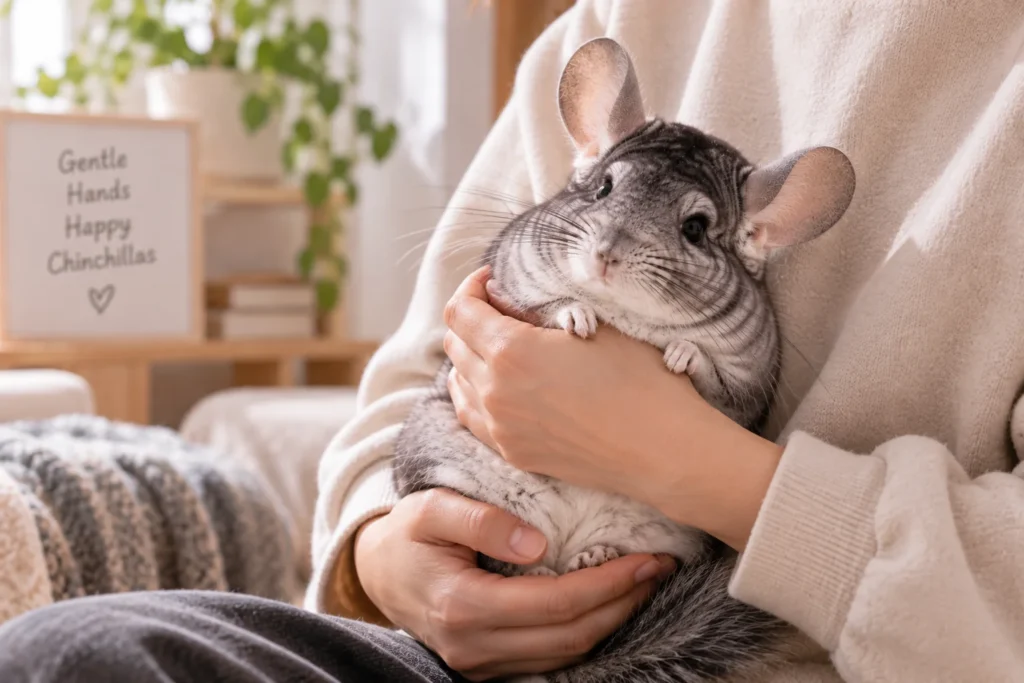
- No cage is big enough to meet all of a chinchilla’s needs—make sure to give them supervised playtime, at least 1 hour per day, outside the cage in a safe area.
- Foraging and Feeding
- Scatter food around the enclosure instead of just using a food bowl to encourage natural foraging behaviour.
- Use toys designed for foraging.
- Exercise Wheel
- Minimum size is 40 cm so their back is completely straight when running to prevent spinal problems.
- Choose solid-surface wheels (not wire) to avoid injuries as their feet may get caught in the gaps of wire wheels.
- Chews
- Chinchillas need to be able to chew constantly to wear down their ever growing teeth.
- Hideout cubes and hammocks
- Chinchillas need an enclosed place, where they can hide, rest and feel safe. Check fabric items for loose threads, as these can pose a strangulation hazard.
- Tunnels
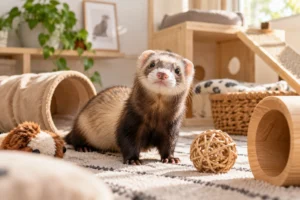
- Many chinchillas enjoy sitting in and running through tunnels.