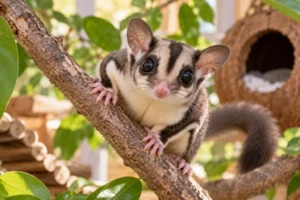
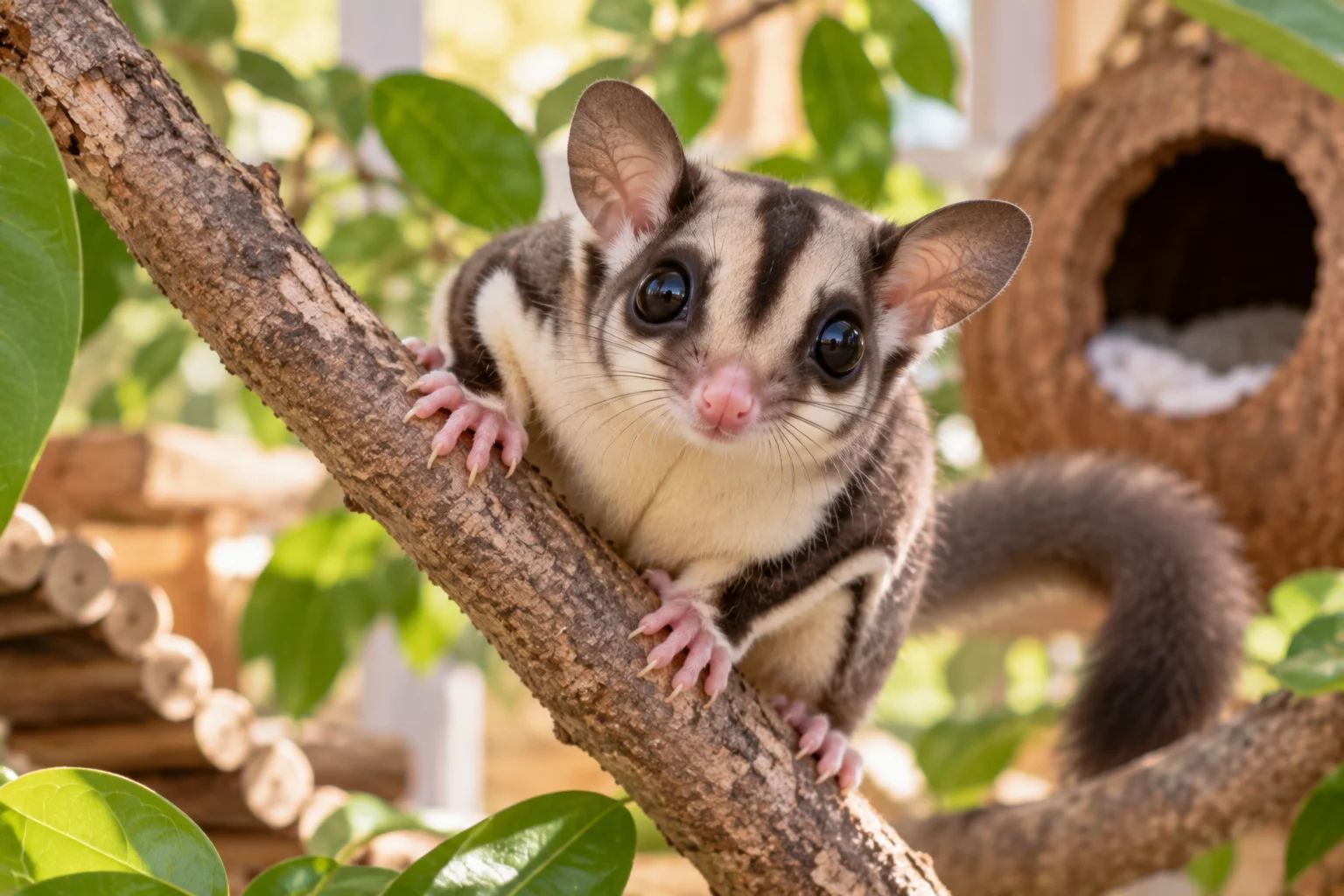
Sugar gliders are cute and adorable, but they require specific care and attention to support their health and wellbeing. Providing the right enclosure, enrichment, nutrition, handling, grooming and medical care can help create a comfortable home for your glider.
Whether you are a first-time sugar glider owner or considering getting one as a pet, understanding their natural behaviours and daily care requirements is an important first step. Sugar gliders are high-maintenance pets, especially when it comes to their diet, enrichment and daily attention.
Choosing the Right Enclosure
Sugar gliders are naturally active animals that glide and climb, so their enclosure should allow them to express these behaviours safely.
An aviary-style setup is ideal. If that is not possible, choose a cage that is:
- Tall, sturdy and PVC-coated
- Multi-level to support climbing and gliding behaviour
- Large enough to provide sufficient vertical space
The minimum enclosure size for a pair is 36” (H) × 24” (W) × 40” (L), but bigger is always better. When choosing an enclosure, prioritise height over width.
Mesh openings should be no larger than 1.2 cm to help prevent escapes.
Temperature and Humidity
Keep the enclosure between 21–26°C with 45–50% humidity.
Place the cage away from:
- Air-conditioners
- Heaters
- Vents
- Direct sunlight
What to Provide Inside the Cage
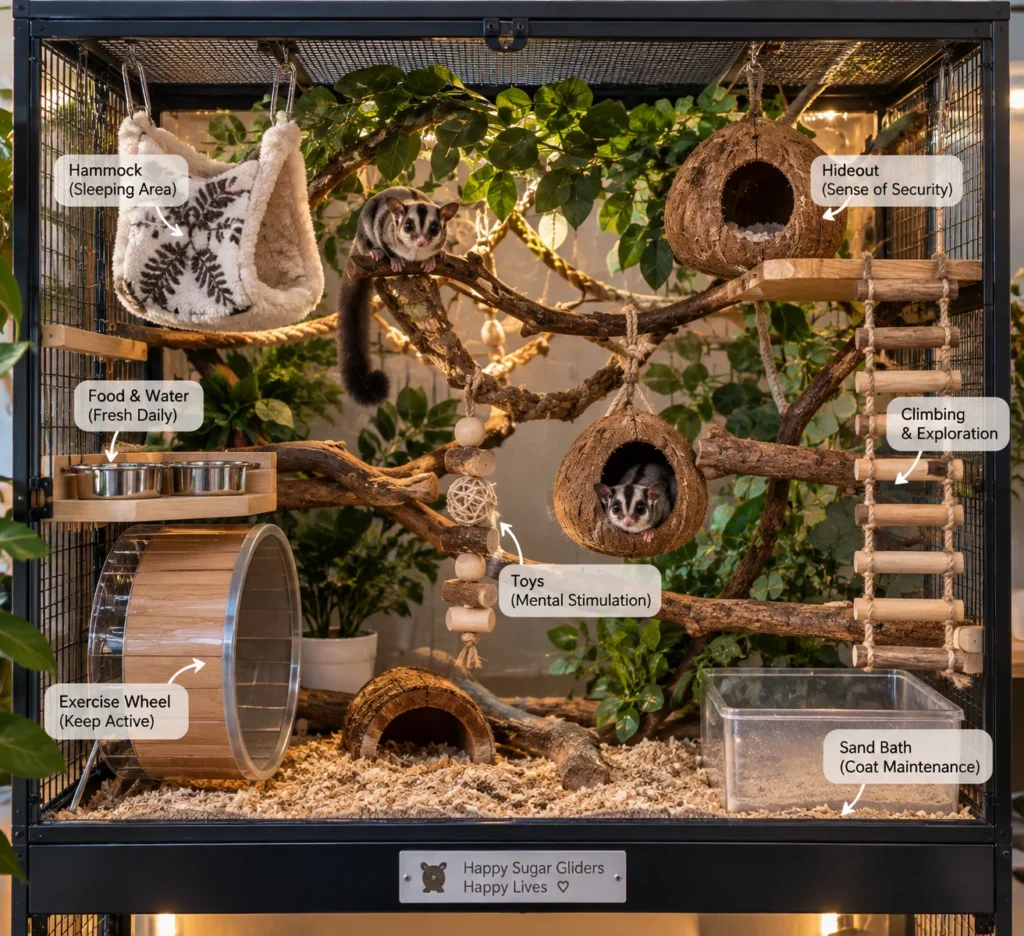
A well-equipped enclosure should include:
- More than one feeding and water station
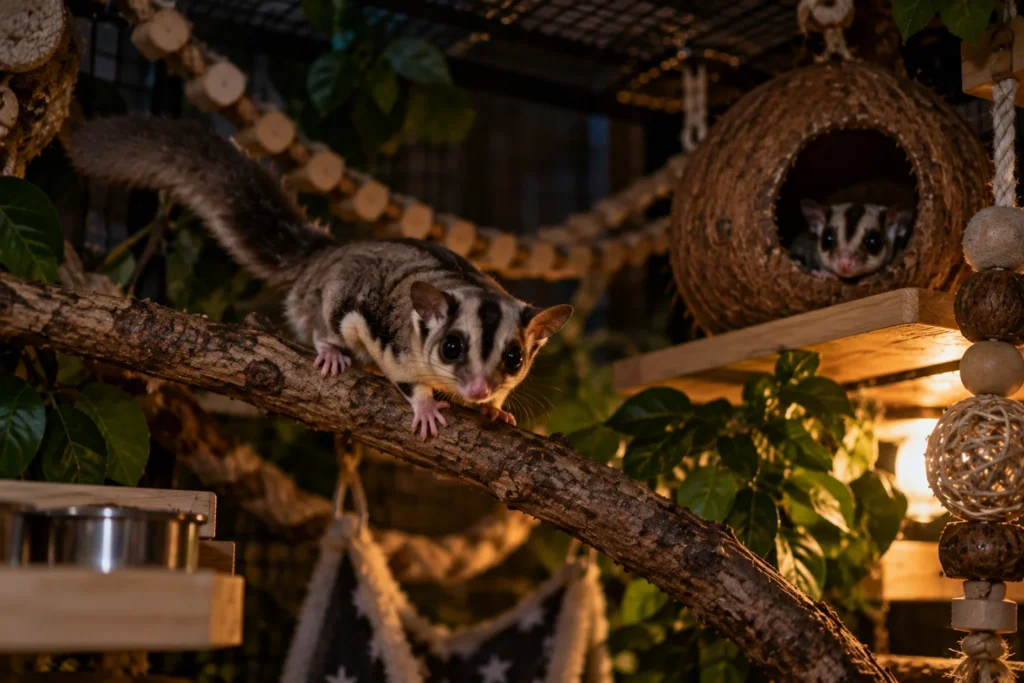
- Plenty of branches, ladders and safe climbing areas
- Sleeping pouches for resting
- Lots of toys for mental stimulation
- A safe exercise wheel
Check pouches, hammocks and other fabric items regularly for loose threads, as these can become a strangulation hazard if a glider becomes tangled.
Choosing a Safe Exercise Wheel
Sugar glider wheels should have a fully solid back and no exposed bearings inside to prevent their tail from becoming caught.
The running track should also have a textured surface so your glider can grip safely while running.
Enrichment and Natural Behaviours
Sugar gliders are active and playful animals that need regular opportunities for mental and physical stimulation.
Toys and Enrichment
Toys can be store-bought or homemade, but safety should always come first.
Suitable options include:
- Rope and wooden toys
- Toys designed for birds, where appropriate
- Other safe toys that encourage climbing and exploration
Avoid anything with wire or loose strings that could tangle your glider.
Rope and wooden toys should be replaced every 3–4 months for hygiene purposes.
Time Outside the Cage
Sugar gliders enjoy playing and “gliding” outside their cage, as well as climbing on their owners.
Always supervise them when they are outside the enclosure to prevent access to dangerous areas such as open toilet seats or bathtubs.
Sugar gliders should never be taken outdoors unless they are secured in a proper glider tote. A single fright can cause them to bolt up a tree and disappear.
Sugar gliders have a special skin membrane called the patagium, which stretches from their wrists to their ankles and allows them to glide. Because this skin is delicate, never use harnesses, collars, leashes or restrictive gear, as these can easily cause injury.
Understanding Sugar Glider Socialisation
Sugar gliders are very social animals and generally do best when kept in pairs or small groups.
A lone glider can become stressed or depressed, which may lead to over-grooming or even self-injury.
Socialisation With Other Gliders
Keeping sugar gliders together requires appropriate consideration of their sex and behaviour.
Neutering male gliders can help prevent unwanted pregnancies and fighting.
Intact males have a bald scent gland on their head and chest. After neutering, the scent glands shrink, the hair grows back, and their temperament usually becomes calmer over the next few months. This can make introductions to other gliders much easier.
Socialisation With Humans
When you first bring your sugar glider home, allow them to settle into their new cage for a few days.
You can place a small piece of clothing with your scent inside the enclosure to help them become familiar with you.
A bonding pouch can also be used, or you can try “tent time” — sitting on the floor inside a tent or glider-proof room and allowing your glider to approach you on their own.
Scatter toys and treats to make the experience fun and positive.
Sugar gliders are playful, loyal and crave attention. If you only keep one, which is not recommended, spend at least two hours a day interacting and bonding with them during their active hours.
Proper Handling
Sugar gliders can be difficult to handle, particularly if they are young or poorly socialised.
Well-socialised sugar gliders are rarely aggressive. However, when frightened or defensive, they may:
- Stand on their back legs
- Make loud noises
- Possibly charge
- Bite
Sugar gliders do not like to be grabbed with a grip hold. Avoid reaching directly toward their face or placing your fingers near their mouth.
They should never be scruffed, meaning held by the back of the neck, or held by the tail.
How to Pick Up a Sugar Glider Safely
While your glider is on a flat surface:
- Place your hands cupped on either side of the glider.
- Gently scoop underneath its stomach.
- Lift all four feet off the surface.
Many sugar gliders also respond well to being carried in a zippered fleece pouch.
Feeding Your Sugar Glider a Balanced Diet
Sugar gliders are omnivores, and their diet in the wild is complex and difficult to replicate in captivity.
A combination of different food sources is recommended.
Omnivore/Insectivore Diet Pellets
Examples include Mazuri, Zupreem and Suncoast Sugar Glider brands.
With high-quality pellets, these can make up as much as 70% of their diet. Otherwise, they should make up approximately 30–50%.
Staple Diets
Staple diets such as HPW and BML contain a mixture of ingredients including:
- Honey
- Hard-boiled egg
- Fruit yogurt
- Cooked meat
- Dry baby cereals
- Calcium supplement
- Multivitamins
These staple diets should provide approximately 50% of daily intake.
Insects
Suitable insect sources include:
- Mealworms
- Crickets
- Superworms
- Waxworms
Insects provide a good source of protein, but they can also contain high levels of fat, so they should only be offered a few times a week.
Vegetables, Fruits, Tree Nuts and Flowers
Examples include:
- Bell peppers
- Cucumbers
- Papaya
- Oranges
- Bananas
- Strawberries
Provide edible flowers when possible.
These foods should be limited to approximately 5–10% of the diet.
Fresh and Clean Water
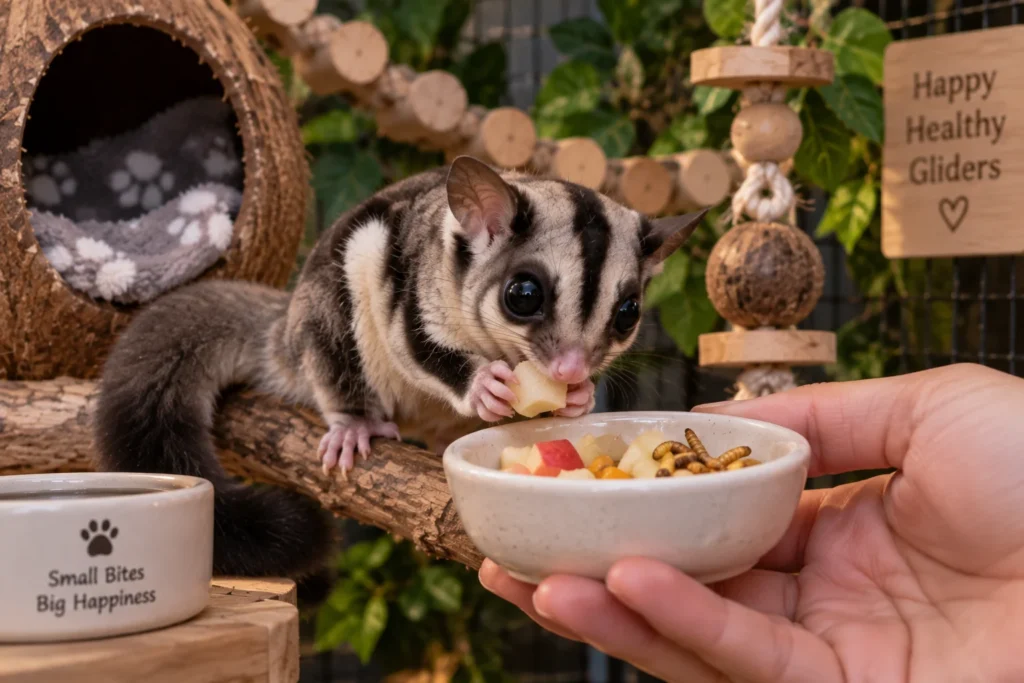
Provide an unlimited amount of fresh, clean water using both a bottle and water dish.
Water should be changed daily.
Pellet food should always be left in the cage, while fresh food should be removed each morning.
Housing Cleaning
Keeping the enclosure clean is an important part of maintaining a healthy environment for your sugar glider.
Daily Cleaning
Every day:
- Wash food and water bowls
- Spot-clean any messes
- Remove old food every morning
- Check the water bottle or dripper to ensure it isn’t blocked
Weekly Cleaning
Once a week:
- Deep clean the whole cage
- Clean toys, pouches, perches and all accessories
- Use diluted vinegar or mild soap
- Rinse everything well
- Allow everything to dry completely before your gliders return
Never clean the cage while the gliders are inside, as cleaning fumes can irritate their eyes, nose and lungs.
Some owners prefer to clean the cage in stages to maintain familiar scents and reduce stress. For example, toys can be washed on one day, pouches another day, and cage bars the next.
Grooming and Nail Care
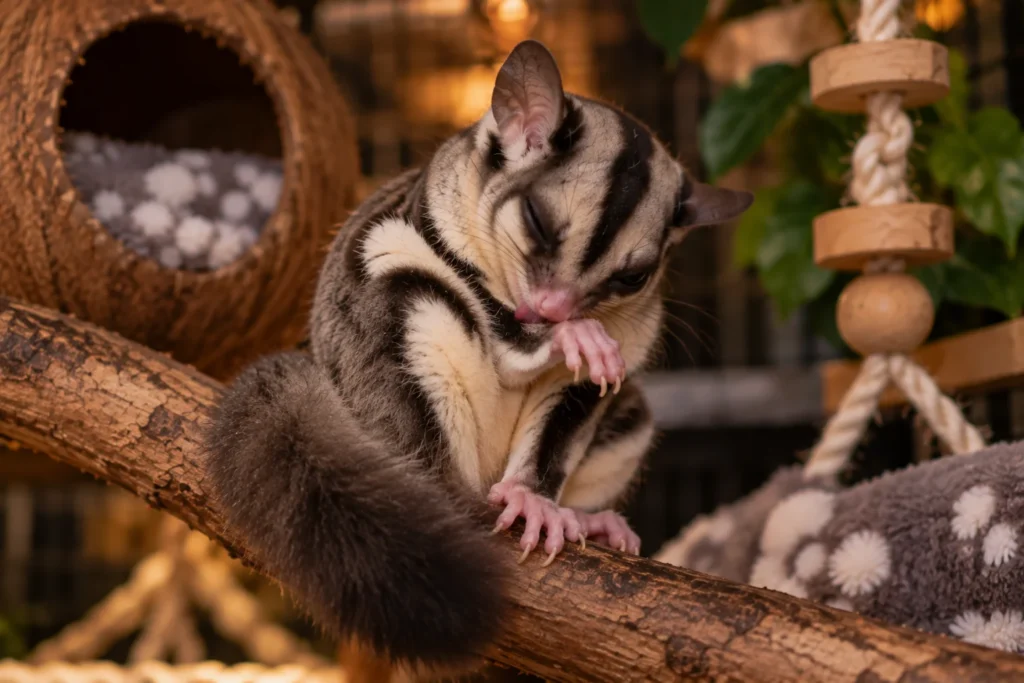
Sugar gliders are naturally clean and groom themselves, so they do not need baths or dust baths.
Their dense fur also means they rarely get fleas or mites.
The main grooming requirement is regular nail trimming every 3–4 weeks.
Keeping their nails short helps prevent them from getting snagged on fabric and hurting themselves.
Cork toys or raptor wheels with nail-trimming inserts can also help wear their nails down between trims.
Recognising Signs of Illness
As a prey animal, a sugar glider may hide signs of illness until the condition is fairly progressed. Contact an exotic veterinarian right away if your glider shows signs such as:
- Constant scratching or fur loss
- Drooling or changes in food choices
- Weight loss
- Limping
- Lumps, bumps or wounds
- Discharge from the eyes, nose, ears or genitals
- Bad smell from the mouth
When Is It an Emergency?
Seek veterinary care immediately if your sugar glider:
- Has not eaten, drunk or pooped for 12 hours
- Has a head tilt or difficulty balancing or walking
- Is wheezing, sneezing or having difficulty breathing
- Has difficulty urinating, cannot urinate, or has blood in the urine
- Is experiencing lethargy
- Has bloating or diarrhoea
- Experiences a seizure
Sugar gliders should also be taken to an exotic veterinarian at least once a year for a check-up. Regular examinations can help identify health issues early and keep them in good condition.
Key Takeaway
Sugar gliders are mostly asleep during the day and most active at night, so it is important not to disturb them while they are sleeping. They can also be quite noisy during their active hours, which is something potential owners should consider.
Although some people describe sugar gliders as “easy pets”, they require high-maintenance care, particularly when it comes to their diet, enrichment and daily attention.
Sugar gliders can live for 12–15 years, making them a long-term commitment. Before getting one, make sure you understand their care requirements and are prepared to provide responsible, consistent care throughout their lives.
Every sugar glider deserves a safe, enriching and comfortable environment where they can express their natural behaviours and receive the care they need.
Visit Ocean Vet Clinic
Need advice about your ferret’s health or care?
Ocean Vet Clinic provides veterinary care for pets, including exotic pets such as ferrets.
📍 No 42, Jalan Pertama 1, Pusat Perdagangan Danga Utama, Skudai 81300, Johor Bahru
📞 +6011-2602 2884
🌐 www.oceanveterinary.com
📧 oceanvet.jb.office@gmail.com