
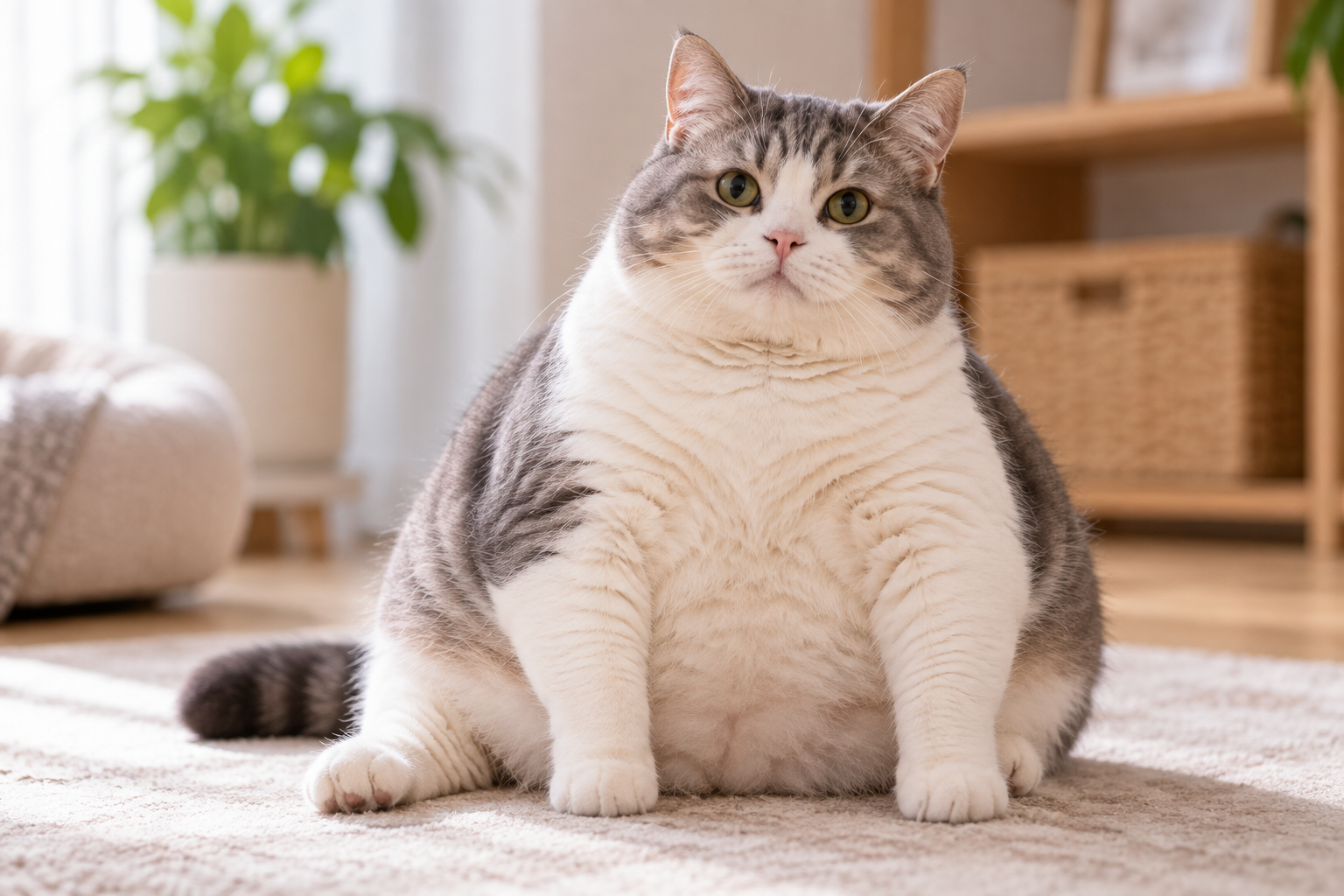
Keeping your pet at a healthy weight is an important part of their overall wellbeing. Being overweight can increase the risk of several health problems and may affect your pet’s quality of life.
But how do you know if your pet is carrying too much weight?
1. Check Their Body Shape
When looking at your pet from above, you should be able to see a slight waist behind the ribs.
From the side, the abdomen should gently slope upwards towards the hind legs.
If your pet has little to no visible waist and their abdomen appears rounded, they may be carrying excess weight.
2. Feel Their Ribs
Gently run your fingers over your pet’s ribs.
You should be able to feel the ribs without pressing too hard, but they should not be visibly sticking out.
If you have difficulty feeling your pet’s ribs because of a thick layer of fat, this may be a sign that they are overweight.
3. Watch Their Daily Activity
Changes in activity can also be a clue.
An overweight pet may:
- Become less active or playful
- Tire more easily
- Have difficulty jumping or climbing
- Spend more time resting
- Be reluctant to exercise
What Can You Do?
Avoid putting your pet on a strict diet without veterinary advice.
Their ideal weight depends on factors such as species, breed, age and body condition. Your veterinarian can assess their body condition and recommend an appropriate diet and feeding plan.
A healthy weight means a healthier and happier pet.
If you are unsure whether your pet is at a healthy weight, bring them in for a check-up. Our veterinary team can help assess their body condition and guide you on the best way to keep them healthy.