Hamsters are small, adorable pets, but they have specific needs that are important for their health and wellbeing. Providing the right enclosure, bedding, enrichment, nutrition and handling can help your hamster live a healthier and more comfortable life.
Whether you are a first-time hamster owner or considering getting one as a pet, understanding their natural behaviours and basic care requirements is an important first step.
Choosing the Right Enclosure
Although hamsters are small, they need plenty of space to explore, exercise and express their natural behaviours.
In the wild, hamsters can travel several kilometres during the night, so a small pet-shop cage may not provide enough space for their needs.
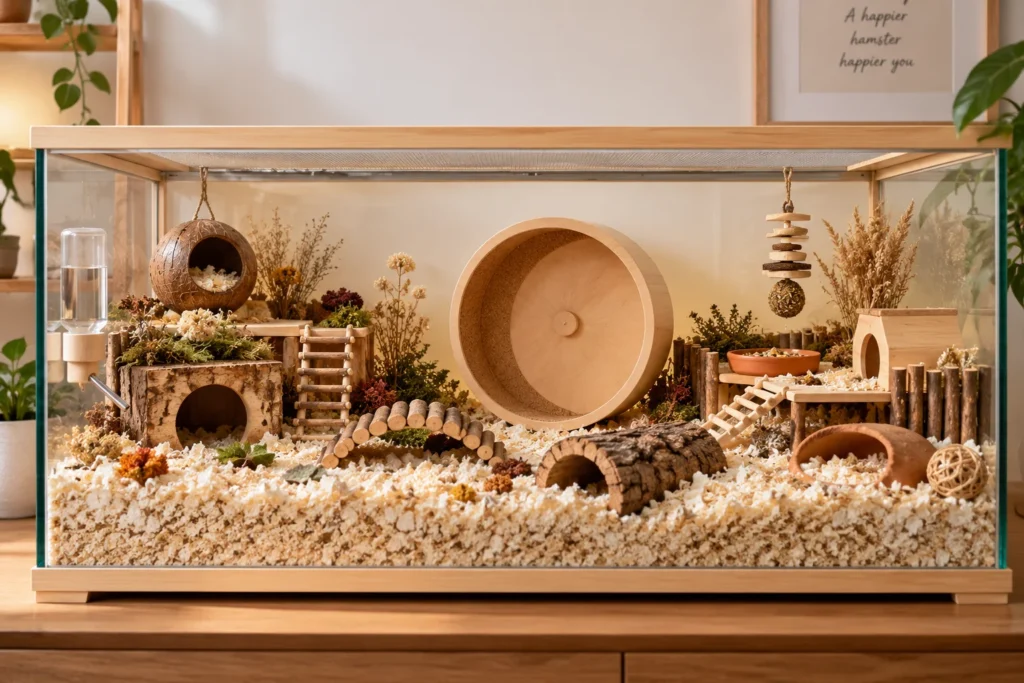
Most hamster welfare recommendations suggest a minimum enclosure size of around 90 × 50 × 50 cm, with a larger enclosure being preferable whenever possible.
Suitable housing options include:
- Glass or aquarium-style tanks
- Acrylic enclosures
- Large storage boxes that have been safely modified for ventilation
The enclosure should be placed away from direct sunlight and areas where the temperature may become too hot.
Barred cages are generally not recommended in the guide because hamsters may chew the bars, which can contribute to dental problems.
For a hamster enclosure, floor space is particularly important. Studies have found improvements in hamster welfare when they are provided with a larger minimum ground area, with 10,000 cm² being one benchmark used in research.
Providing Enough Bedding
Hamsters are natural burrowers. In the wild, they dig and create tunnels, so bedding is more than just something to cover the floor of their enclosure.
Providing sufficient depth allows hamsters to dig, tunnel and create their own sleeping areas.
A recommended bedding depth is at least 15 cm, although deeper bedding is even better when the enclosure allows it.
Suitable bedding materials include:
- Paper-based bedding
- Hemp
- Aspen
- Birch
- Spruce shavings
Some materials such as hemp, large aspen pieces, pellets, shredded newspaper and unscented ripped-up toilet paper can be used safely, but they may not hold burrows as effectively on their own. Mixing suitable materials can help improve the structure of the bedding.
Bedding to Avoid
Some bedding materials should be avoided because they may pose health risks:
- Pine or cedar shavings – may contribute to respiratory problems.
- Scented bedding – hamsters are sensitive to smells and strong fragrances.
- Cotton bedding – can cause problems if swallowed or become wrapped around limbs and restrict circulation.
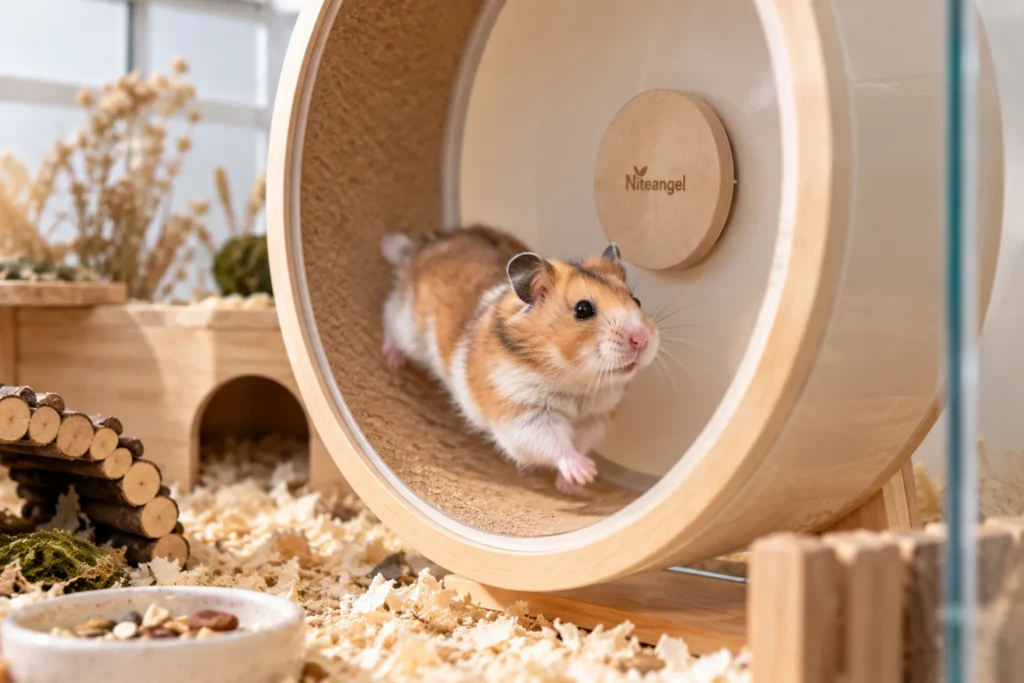
Exercise Wheels: Size and Safety Matter
An exercise wheel is an important part of a hamster’s enclosure, but choosing the correct wheel is essential.
The wheel should be large enough for your hamster to run with its back completely straight. A wheel that is too small can force the hamster into an unnatural curved position and may contribute to spinal problems.
Recommended minimum wheel sizes include:
- 20 cm for dwarf hamsters
- 25 cm for Syrian and Chinese hamsters
Choose a solid-surface wheel rather than a wire wheel. A hamster’s feet can become trapped in the gaps of wire wheels, potentially causing injuries.
Exercise Equipment to Avoid
Some commonly sold hamster products are not recommended.
Flying saucers or angled saucers can allow hamsters to run at an unstable angle and potentially fall off and injure themselves.
Hamster balls are also not recommended because they can restrict the hamster’s control over its movement, provide poor ventilation and cause stress from confinement.
Keep the Enclosure Clean Without Over-Cleaning
Hamsters rely heavily on their sense of smell. They use scent glands to mark and recognise their territory, so completely removing all bedding and familiar smells too frequently can be stressful and confusing for them.
Instead of constantly replacing the entire enclosure, focus on spot cleaning.
Spot Cleaning
Regularly remove:
- Soiled bedding
- Pee-stained areas
- Obviously dirty sections of the enclosure
A full enclosure clean should only be carried out when necessary, such as when:
- Your hamster is unwell.
- There is a strong smell that cannot be managed through spot cleaning.
When performing a full clean, retaining some clean, familiar bedding can help your hamster maintain familiar scents within its environment.
Enrichment and Natural Behaviours
Hamsters need more than just food, water and a cage. Enrichment is important for keeping them physically and mentally stimulated.
Without enough enrichment, hamsters may become stressed or develop unwanted behaviours such as excessive biting, boredom or chewing on their enclosure.
Encourage Natural Foraging
Instead of always placing food in a bowl, you can encourage natural foraging behaviours by:
- Scattering food around the enclosure.
- Hiding food within the bedding.
- Using a tray filled with shredded or recycled paper foraging material.
- Providing suitable toys designed for foraging.
- Offering safe plant sprays for additional foraging opportunities.
These activities encourage hamsters to search, dig and explore their environment.
Feeding Your Hamster a Balanced Diet
Hamsters are omnivores, so they require a varied and balanced diet.
Mixed Seeds
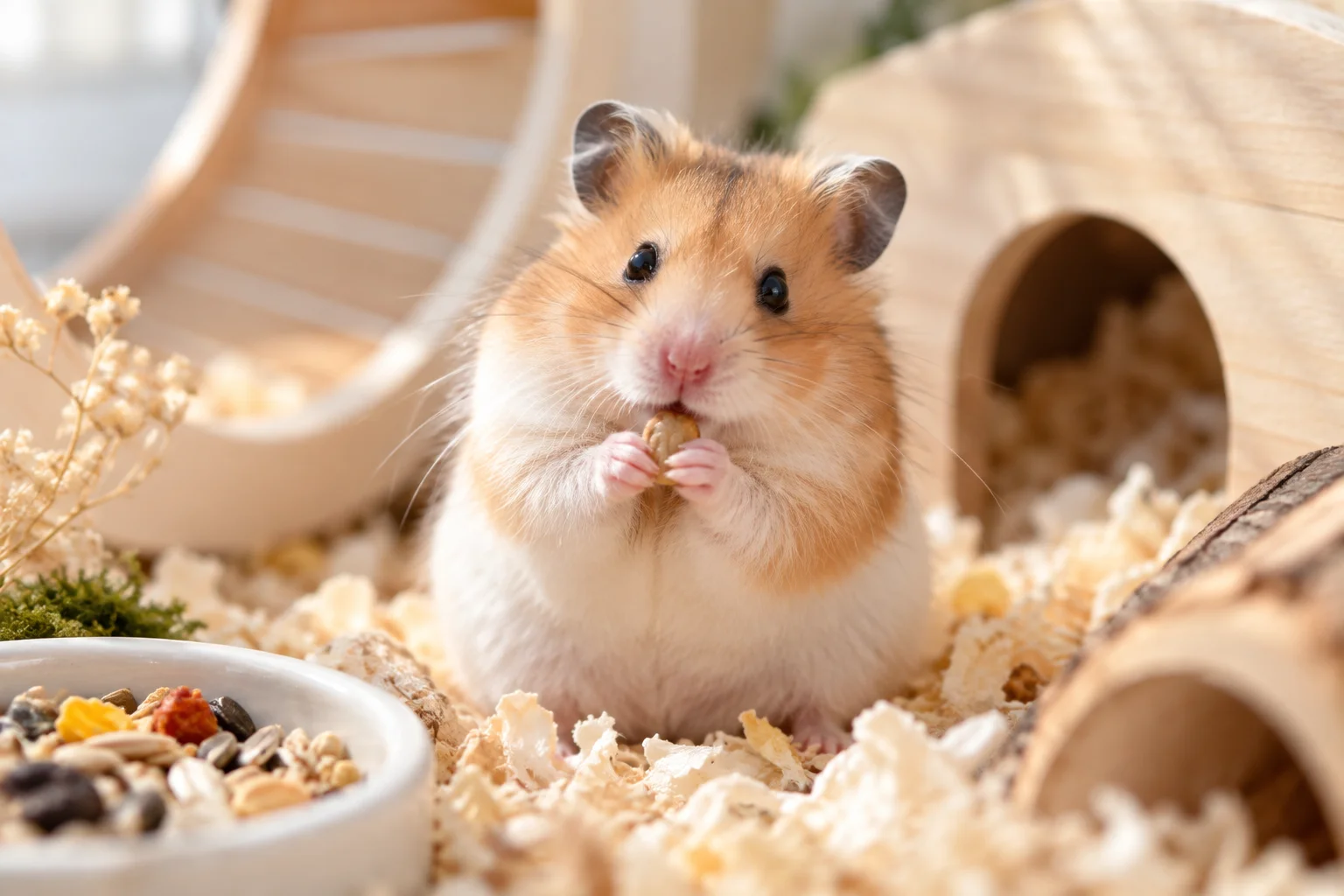
Seed mixes can form part of a hamster’s diet, but hamsters may selectively eat their favourite foods. They often choose foods that are higher in fat, which can result in an unbalanced diet and contribute to problems such as obesity.
Hamster-Specific Pellets
Pellets specifically formulated for hamsters can help provide balanced nutrition.
Because each piece contains a similar nutritional composition, pellets can reduce selective eating and help ensure that your hamster receives the nutrients it needs.
Protein Sources
Hamsters also require sources of protein. Suitable options include freeze-dried insects such as mealworms and boiled egg.
Live prey should be avoided because it may injure the hamster or introduce unwanted organisms into the enclosure.
Vegetables and Fruits
Fresh vegetables can be offered as part of a varied diet. Examples include:
- Peppers
- Cucumber
- Leafy greens
Fruits such as carrots, bananas and apples should be offered in moderation because of their higher sugar content.
Remember that hamsters are food hoarders. Fresh food may be stored inside their enclosure and can eventually spoil or develop mould. Check their hiding areas regularly and consider dried alternatives where appropriate.
Fresh Water
Hamsters should have access to fresh, clean water at all times.
Water can be provided using either a water bottle or bowl, depending on the hamster’s preference. Water should be changed daily.
Proper Handling
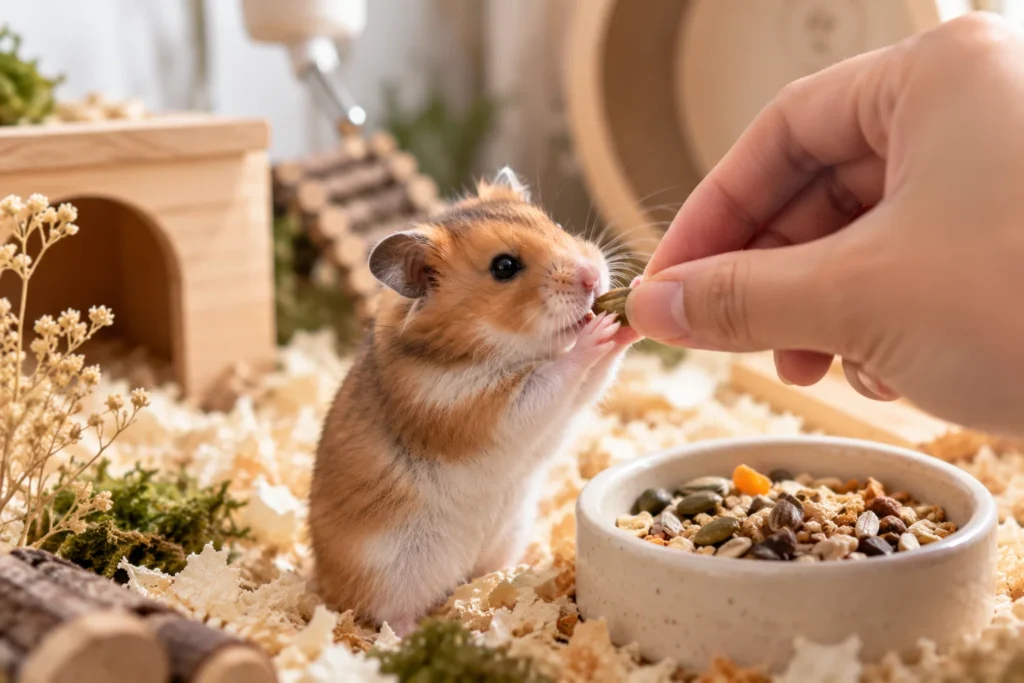
Hamsters are small and delicate animals, so they should always be handled gently.
When picking up your hamster:
- Form a cup with both hands around either side of their body.
- Scoop them up securely using both palms.
- Keep them close to your body while holding them.
- When possible, sit on the ground while handling them to reduce the risk of injury if they jump.
If your hamster appears frightened, place them back into their enclosure and allow them to calm down. You can gradually build trust by offering treats and allowing them to approach you voluntarily.
Children should always be supervised when handling hamsters, as they require gentle handling and may bite when frightened or threatened.
Socialisation: Hamsters Prefer to Live Alone
Unlike some other small pets, hamsters are generally solitary animals. They do not need another hamster as a companion to feel comfortable.
Even hamsters that have grown up together, including siblings, may eventually fight, particularly when they are the same sex.
Male and female hamsters should also not be housed together because of the risk of unwanted pregnancies.
Socialisation With Humans
Hamsters are usually most active at night and sleep during much of the day. They should not be woken simply for bonding or play.
This means hamsters may not be the most suitable pet for young children or anyone looking for a pet that enjoys frequent cuddling.
Hamsters also have relatively poor eyesight, so it is helpful to speak gently to them before touching them. With patience and gentle handling, they may eventually become comfortable taking treats from your hand and sitting calmly on your palm.
Grooming and Sand Baths
Hamsters generally should not be bathed with water unless specifically advised by a veterinarian.
They naturally produce oils that help keep their coat healthy. Washing them can remove these oils, potentially causing skin and coat problems.
Bathing can also be very stressful and carries a risk of hypothermia because of their small body size.
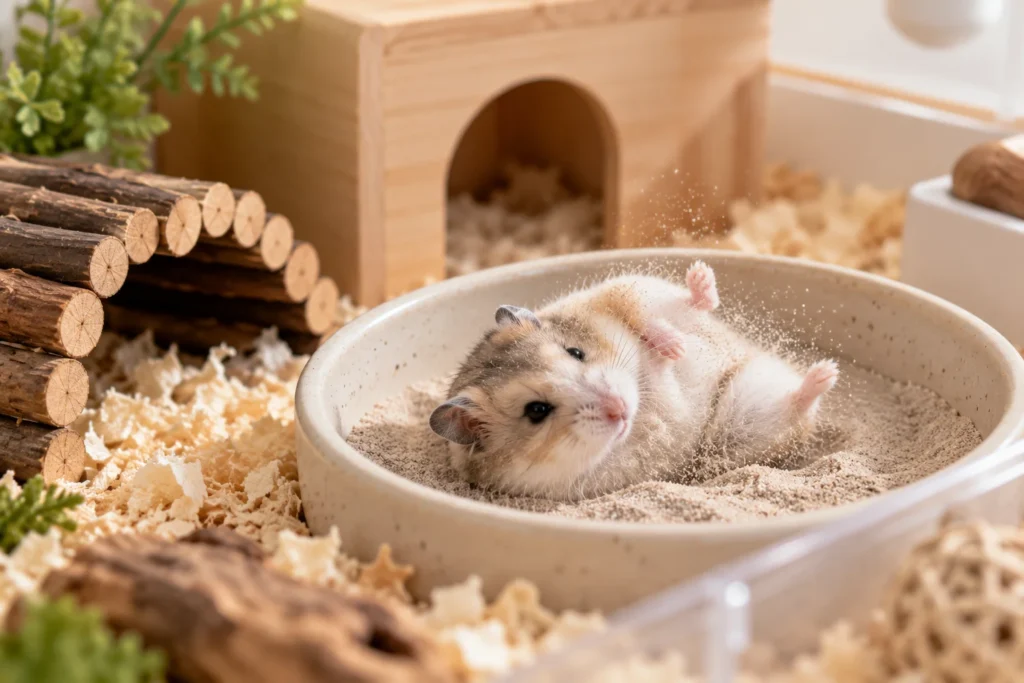
Instead, provide a suitable dust-free sand bath.
Possible options include:
- Chinchilla sand, provided it is suitable and dust-free
- Children’s play sand
- Reptile sand without added calcium or dyes
Avoid:
- Powder or dust-based products, which can cause respiratory problems.
- Bird sand, which may contain added grit or chemicals.
Nail Care
Most hamsters do not require routine nail trimming when they have access to different textures within their enclosure, such as wood, rocks and other rough surfaces.
However, their nails should still be monitored. Overgrown nails can curl into the paw and potentially cause pain or infection.
Medical Care and Recognising Illness
Hamsters are prey animals and may hide signs of illness until a condition has already progressed. This makes it important for owners to pay close attention to changes in their behaviour and appearance.
Contact a hamster or exotic-pet veterinarian if you notice:
- Constant scratching or fur loss
- Drooling or changes in food preferences
- Weight loss
- Limping
- Lumps, bumps or wounds
- Discharge from the eyes, nose, ears or genital area
- A bad smell coming from the mouth
When Is It an Emergency?
Seek veterinary care immediately if your hamster shows signs such as:
- Not eating, drinking or passing faeces for 12 hours
- Head tilt or difficulty balancing and walking
- Wheezing, sneezing or difficulty breathing
- Difficulty urinating or blood in the urine
- Severe lethargy
- Bloating or diarrhoea
- Seizures
Regular veterinary check-ups can also help detect health problems early. An exotic-pet veterinary check-up at least once a year can be considered as part of your hamster’s routine care.
Key Takeaway
Hamsters may be small, but their care requirements are not.
A healthy hamster needs more than a small cage and a food bowl. Providing adequate enclosure space, deep bedding, a correctly sized solid exercise wheel, enrichment, a balanced diet, safe handling and appropriate veterinary care can make a significant difference to their wellbeing.
Most importantly, take the time to understand your hamster’s natural behaviours. Giving them an environment that allows them to dig, forage, explore, exercise and rest undisturbed is an important part of responsible pet ownership.
Every hamster deserves a safe, spacious and enriching environment where they can express their natural behaviours.
Visit Ocean Vet Clinic
Need advice about your hamster’s health or care?
Ocean Vet Clinic provides veterinary care for pets, including exotic pets such as hamsters.
📍 No 42, Jalan Pertama 1, Pusat Perdagangan Danga Utama, Skudai 81300, Johor Bahru
📞 +6011-2602 2884
🌐 www.oceanveterinary.com
📧 oceanvet.jb.office@gmail.com