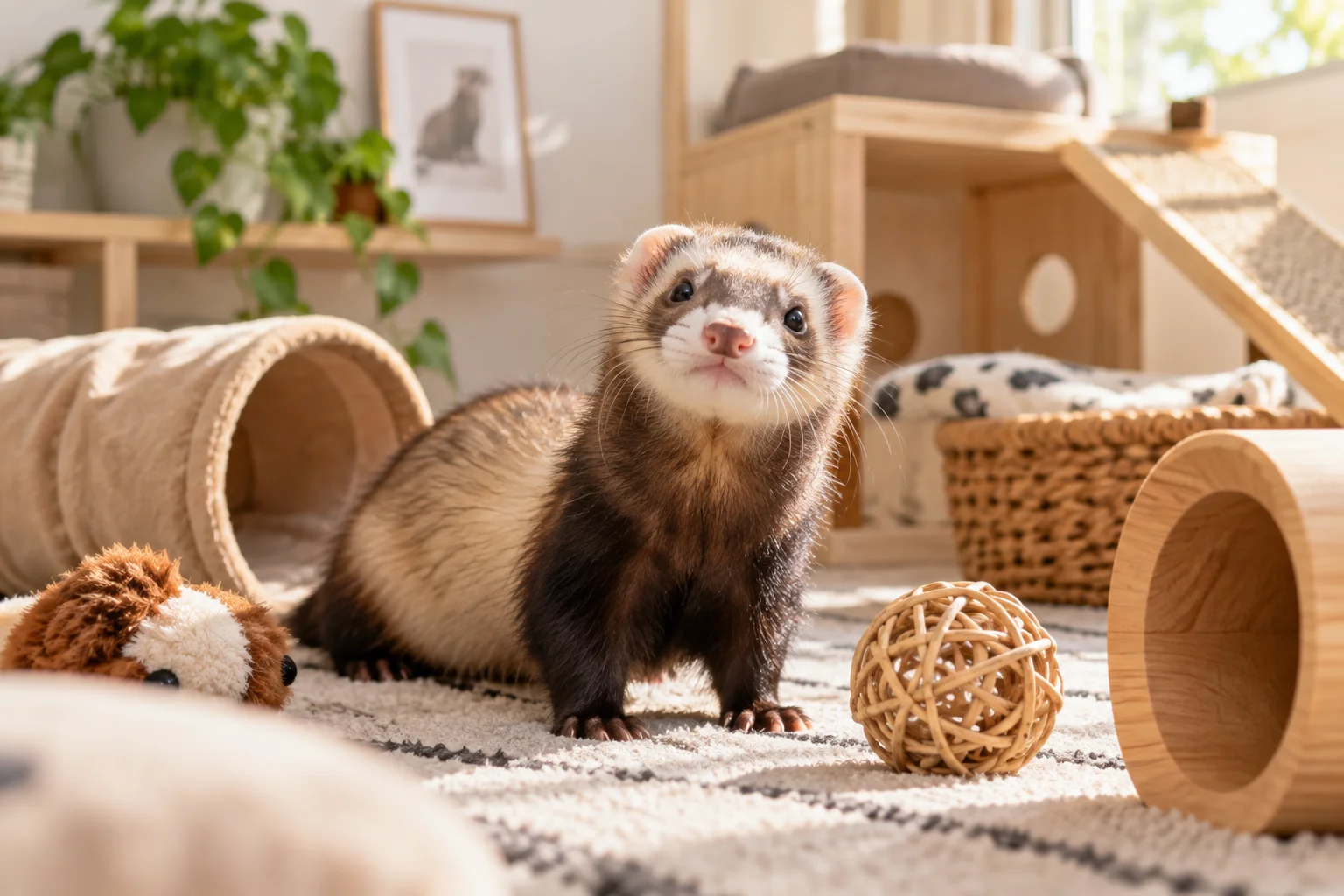
Ferrets are playful, curious and intelligent pets, but they have specific needs that are important for their health and wellbeing. Providing the right enclosure, bedding, enrichment, nutrition and handling can help your ferret live a healthier and more comfortable life.
Whether you are a first-time ferret owner or considering getting one as a pet, understanding their natural behaviours and basic care requirements is an important first step.
Choosing the Right Enclosure
Ferrets are naturally active animals and need plenty of space to move, explore and play.
A suitable enclosure should provide at least 4,500 cm² of floor space with a minimum height of 50 cm, allowing your ferret to stand upright comfortably.
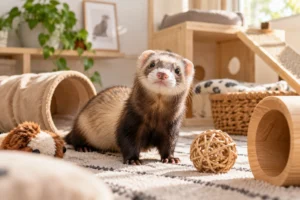
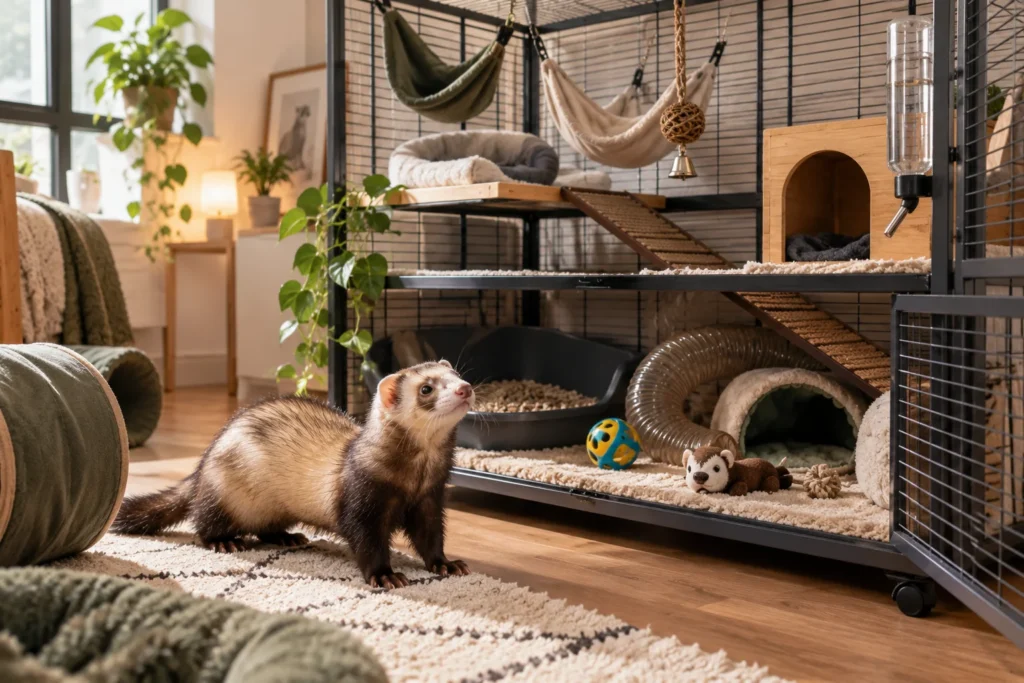
When setting up their enclosure, consider including:
- Ramps and shelves for climbing
- Hammocks and cosy sleeping areas
- Tunnels and tubes for exploring
- Safe toys for mental stimulation
- Multiple levels to make better use of the space
The enclosure should also be escape-proof. If your ferret can fit its head through a gap, the rest of its body may be able to follow.
Ferrets can sleep for around 18–20 hours a day, so make sure they have several comfortable and quiet places to rest.
Keep the enclosure away from direct sunlight and provide good ventilation. Regular cleaning is also important because ferrets have sensitive respiratory systems.
Providing Suitable Bedding
Ferrets love to dig and burrow, so suitable bedding can help make their enclosure more comfortable.
High-quality paper-based bedding, such as shredded or pelleted paper, can be used at a depth of around 1–2 inches.
Fleece blankets, hammocks and fabric nesting boxes can also provide comfortable sleeping areas.
Avoid wood or cedar shavings, as these may contribute to respiratory problems.
Feeding Your Ferret a Balanced Diet
Ferrets are obligate carnivores, which means their nutritional needs are primarily based on meat and animal-based nutrients.
A suitable diet can include:
- High-quality ferret pellets
- Small pieces of lean, cooked meat
- Fresh and clean water available at all times
A high-quality, protein-rich and low-carbohydrate diet is important for ferrets. High-quality kitten food may also be offered for short-term feeding when appropriate.
Raw meat is not recommended in the source material due to the risk of stomach upset.
For young ferrets under 16 weeks of age, food may be moistened before feeding.
Adult ferrets can be fed twice a day or through several smaller meals throughout the day. Avoid overfeeding, as excess food intake combined with insufficient enrichment may contribute to obesity.
Socialisation
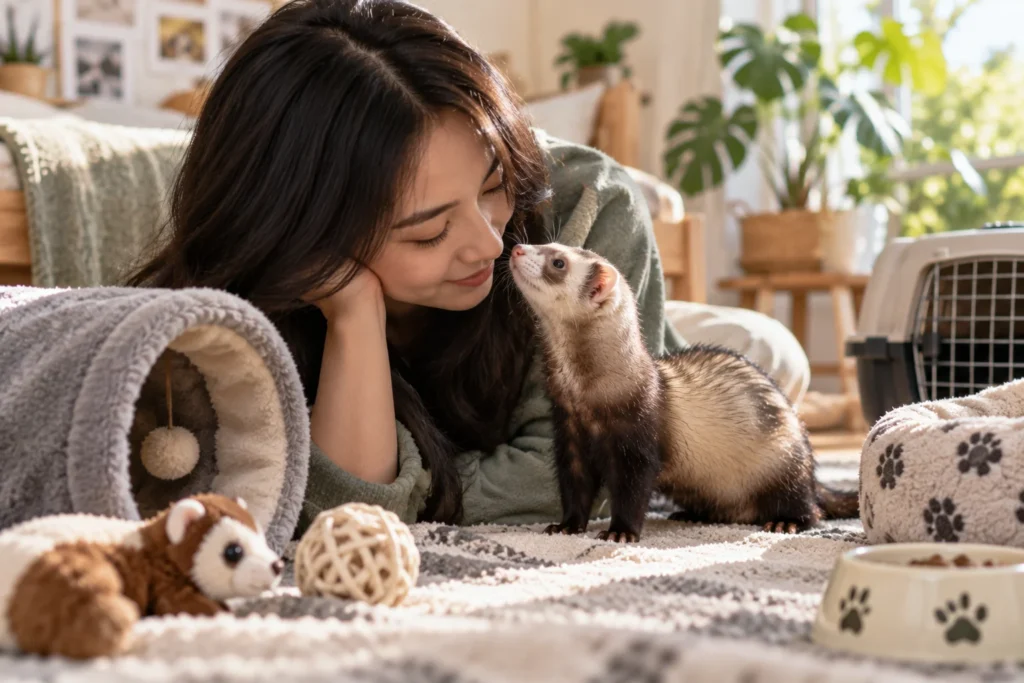
Ferrets are highly social animals and many enjoy interacting with other ferrets.
They may wrestle, chase each other and sleep together. Keeping multiple ferrets can provide companionship and social interaction.
However, a single ferret can also be kept as long as it receives enough daily interaction, playtime and mental enrichment.
Some activities you can enjoy with your ferret include:
- Gentle tug-of-war with a rope
- Hide-and-seek using a towel
- Stalking and chasing games around furniture
- “Magic carpet rides” using a towel
- Chasing balls or toys on a string
Remember that ferrets usually sleep during the day, so they should not be woken up simply for bonding or play.
Enrichment and Natural Behaviours
Ferrets need regular physical and mental stimulation to help prevent boredom, stress and behavioural problems.
Encourage Natural Foraging
Foraging activities can be a fun way to encourage natural behaviours.
Try using:
- Treat-dispensing toys
- Safe boxes and paper bags with treats hidden inside
- Egg cartons with small holes
- Cardboard boxes with holes
- Tunnels and climbing areas
These activities encourage ferrets to search, explore and interact with their environment.
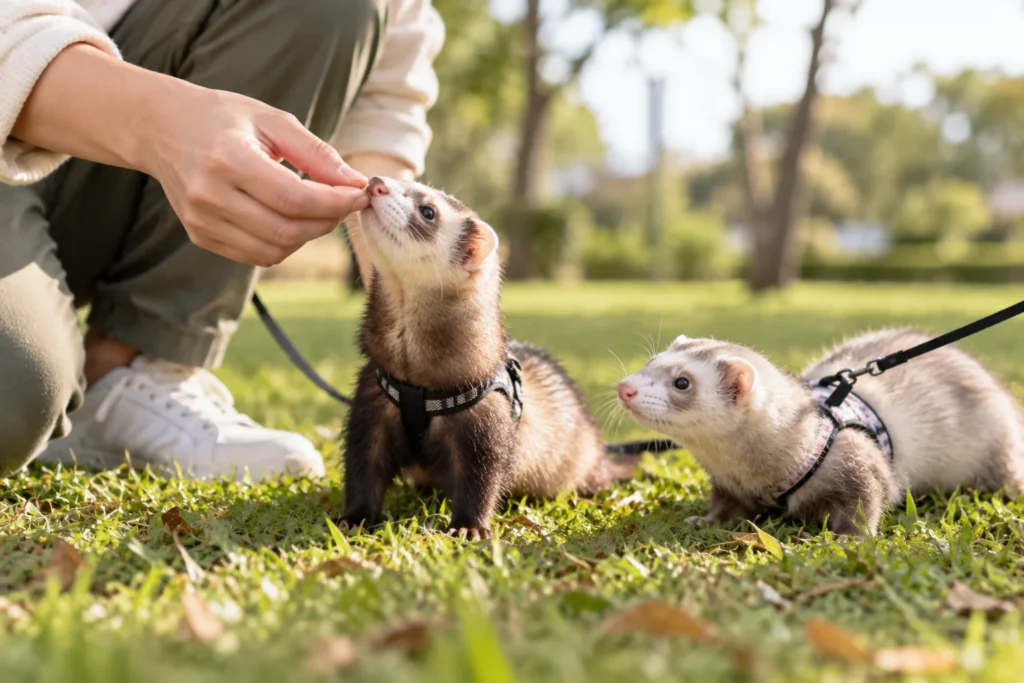
Ferrets can also be trained to walk using a suitable harness and lead.
If allowing your ferret to explore a room freely, remove potentially dangerous objects beforehand. Ferrets may put objects into their mouths and can accidentally eat things they should not.
Grooming
Ferrets naturally groom themselves and generally do not require frequent bathing.
Bathing
Bathing about once a month may be sufficient.
Frequent bathing can cause skin dryness and irritation, and bathing will not completely remove their natural musky smell.
Brushing
Ferrets shed a significant amount of hair. Brushing several times a week can help reduce the amount of loose hair they may ingest while grooming themselves.
Dental Care
Ferrets can be introduced to daily teeth brushing from a young age using a small finger toothbrush and suitable meat-flavoured toothpaste formulated for ferrets or cats.
Proper Handling
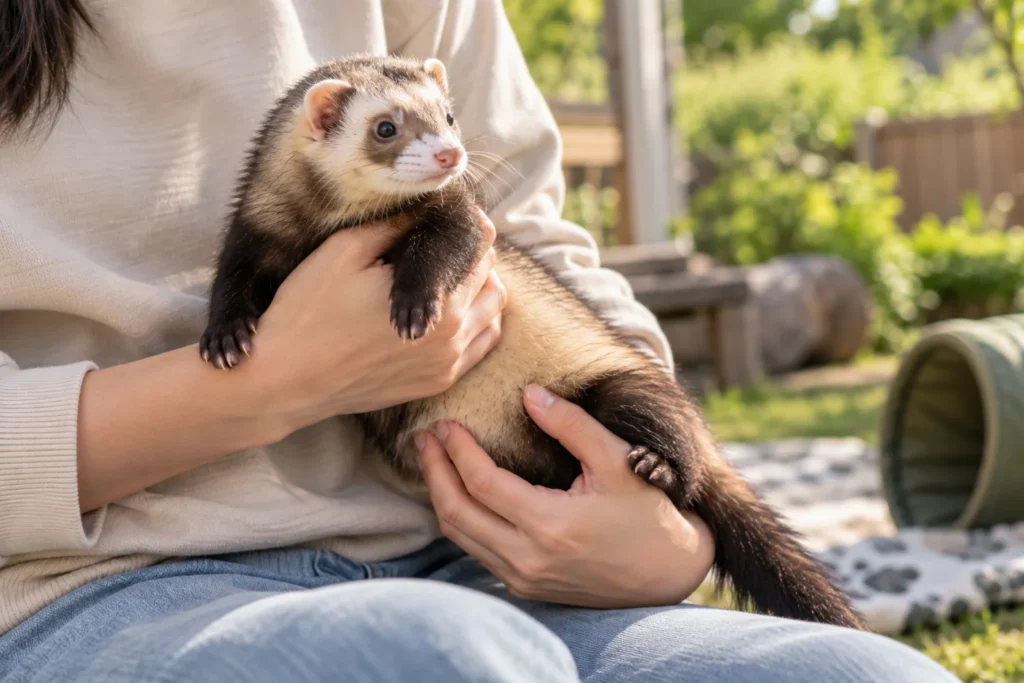
Ferrets should be handled gently and securely.
Place one hand underneath or around the ferret’s chest while supporting its hind legs with the other hand.
Bring the ferret close to your body so it feels secure while being carried.
When handling a ferret, sitting on the ground can also help prevent injuries if the ferret suddenly jumps.
If your ferret appears frightened, return it to its enclosure and allow it to approach you again. Treats and gentle interaction can help build trust.
Children should always be supervised when handling ferrets, as they need to be handled carefully and may bite if frightened or uncomfortable.
Medical Care and Recognising Illness
Ferrets can sometimes hide signs of illness until a condition has progressed, so it is important to pay attention to changes in their behaviour and appearance.
Contact an exotic veterinarian if you notice:
- Constant scratching or fur loss
- Drooling or changes in food choices
- Weight loss
- Limping
- Lumps, bumps or wounds
- Discharge from the eyes, nose, ears or genital area
- A bad smell coming from the mouth
When Is It an Emergency?
Seek veterinary care immediately if your ferret shows signs such as:
- Not eating, drinking or passing stool for 12 hours
- Head tilt or difficulty balancing and walking
- Wheezing, sneezing or difficulty breathing
- Difficulty urinating or blood in the urine
- Severe lethargy
- Bloating or diarrhoea
- Seizures
Regular veterinary check-ups can also help detect health problems early. An exotic-pet veterinary check-up at least once a year can be considered as part of your ferret’s routine care.
Understanding Their Natural Musky Smell
Ferrets, particularly unneutered males, can have a naturally strong musky smell.
Bathing does not completely remove this natural scent. In fact, frequent bathing may cause skin dryness and irritation.
Instead, regular enclosure cleaning and proper care can help manage unwanted odours while keeping your ferret comfortable.
Ferrets Are a Long-Term Commitment
Ferrets can live for 8 years or more, making them a long-term commitment.
They are active, curious animals that require regular interaction, enrichment, a suitable diet, appropriate housing and consistent care.
Before bringing a ferret home, make sure you understand its needs and are prepared to provide proper care throughout its life.
Being a responsible ferret owner means creating a safe, comfortable environment and giving your pet the physical, mental and veterinary care it needs.
Key Takeaway
Ferrets may be small, but their care requirements are not.
A healthy ferret needs more than an enclosure and a food bowl. Providing adequate enclosure space, suitable bedding, a balanced diet, enrichment, safe handling, proper grooming and appropriate veterinary care can make a significant difference to their wellbeing.
Most importantly, take the time to understand your ferret’s natural behaviours. Giving them an environment that allows them to explore, play, forage, exercise and rest comfortably is an important part of responsible pet ownership.
Every ferret deserves a safe, enriching and comfortable environment where they can express their natural behaviours.
Visit Ocean Vet Clinic
Need advice about your ferret’s health or care?
Ocean Vet Clinic provides veterinary care for pets, including exotic pets such as ferrets.
📍 No 42, Jalan Pertama 1, Pusat Perdagangan Danga Utama, Skudai 81300, Johor Bahru
📞 +6011-2602 2884
🌐 www.oceanveterinary.com
📧 oceanvet.jb.office@gmail.com