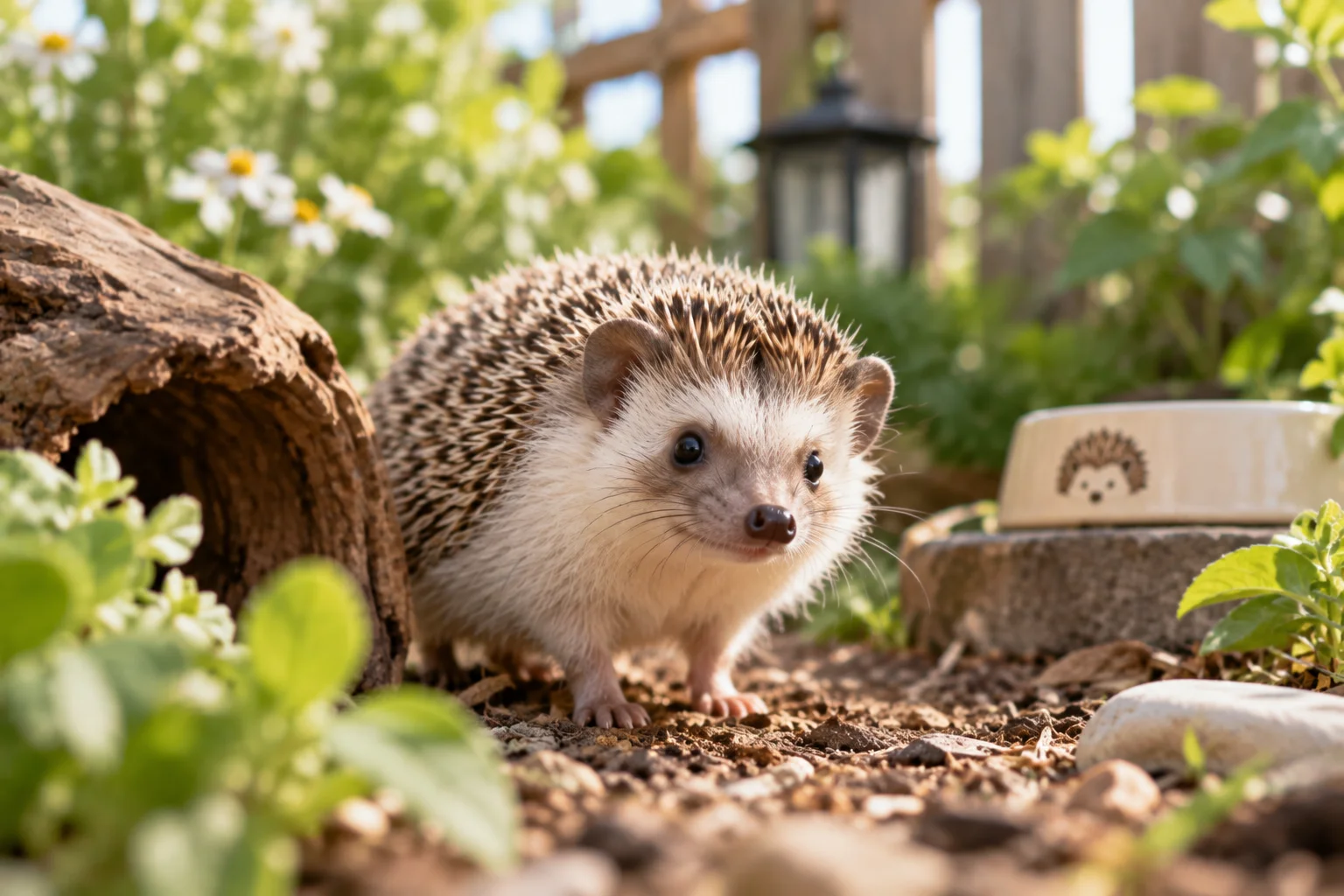
Hedgehogs are small, unique and adorable pets, but they have specific care requirements that are important for their health and wellbeing. Providing the right enclosure, bedding, exercise, nutrition, handling and veterinary care can help your hedgehog live a healthier and more comfortable life.
Whether you are a first-time hedgehog owner or considering getting one as a pet, understanding their natural behaviours and basic care requirements is an important first step.
Choosing the Right Enclosure
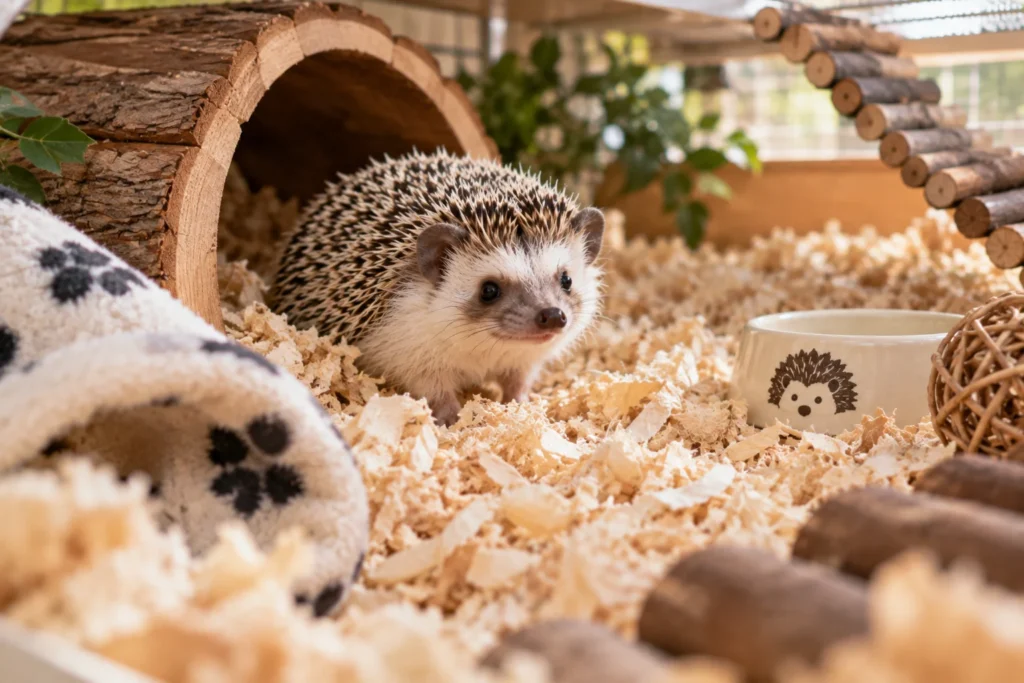
Hedgehogs need a safe and spacious enclosure where they can move around, rest and explore comfortably.
A large terrarium or guinea pig cage can be suitable for housing a hedgehog. The enclosure should be at least 12 × 24 inches, although bigger is always better when possible.
The enclosure should have a solid bottom, as wire flooring can injure a hedgehog’s feet.
Provide comfortable hiding areas such as:
- A soft pouch
- An igloo or similar hideout
The enclosure should also be kept at a suitable temperature of around 21–26°C.
Place the enclosure away from:
- Direct sunlight
- Drafty areas
- Cold areas
- Places where the temperature can fluctuate significantly
Keeping the environment stable and comfortable is important for your hedgehog’s wellbeing.
Providing the Right Bedding
Bedding helps provide a comfortable surface for your hedgehog and allows it to move around its enclosure safely.
Suitable bedding options include soft and dust-free materials, such as:
- Fleece
- Towels
- Recycled paper pellets
Another option is 3–4 inches of kiln-dried pine or aspen bedding.
However, cedar bedding should be avoided because its fumes can irritate the lungs.
Managing Toilet Areas
Hedgehogs may pee or poo while running on their exercise wheel.
A shallow litter tray placed underneath the wheel can help make cleaning easier.
Suitable options include:
- Soft paper towels
- Pellet litter
Avoid using clumping or clay cat litter, as these can create problems for hedgehogs.
Exercise and Enrichment
Hedgehogs are naturally active animals. In the wild, they can travel miles every night, so providing opportunities for exercise is important.
Regular exercise can also help prevent obesity.
An exercise wheel is one of the most important pieces of equipment in a hedgehog’s enclosure.
The wheel should:
- Have a solid running surface
- Never be made from wire
- Be around 11–12 inches in size
Chinchilla-sized wheels can also be suitable.
Toys and Enrichment
Hedgehogs can benefit from different toys and activities that encourage movement and exploration.
Suitable options include:
- Tubes
- Tunnels
- Small balls with bells
- Cat toys
Hedgehogs should also have daily supervised time outside their enclosure to explore and exercise.
Understanding Hedgehog Socialisation
Hedgehogs are generally solitary animals. They are not highly social and usually only interact with others for breeding.
For this reason, hedgehogs should be kept in separate cages.
This is particularly important for males, as they may fight when housed together.
Hedgehogs are also nocturnal, meaning they are most active at night.
They should not be woken up simply for bonding or play.
Because of their nocturnal behaviour, owners should also expect that hedgehogs may be noisy during the night.
Building a Bond With Your Hedgehog
Hedgehogs are not typically cuddly pets, but they can still develop a bond with their owners.
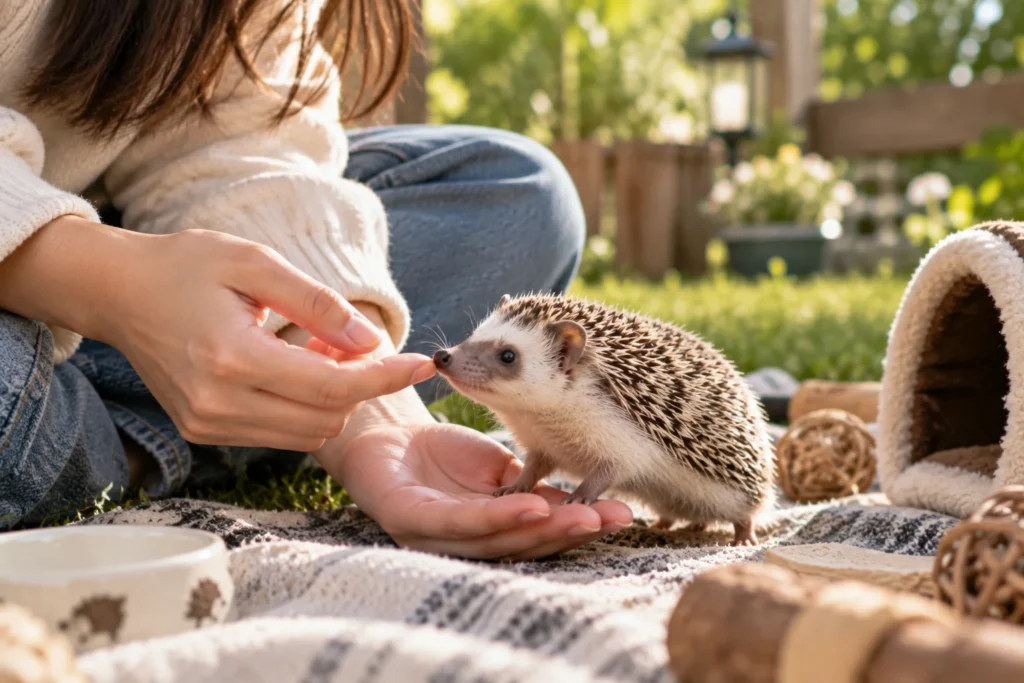
Gentle and consistent handling from a young age can help them become more comfortable around people.
Hedgehogs may also perform a behaviour known as self-anointing when they encounter a new or interesting smell.
This behaviour is normal and harmless.
Handling Your Hedgehog Safely
Hedgehogs have tiny, sharp spikes or quills that can make handling them seem intimidating.
Their quills are not barbed, so they will not puncture the skin like a barb.
When bringing a new hedgehog home, keep handling to a minimum for the first few days. This gives them time to become familiar with their new environment and your scent.
Avoid using gloves when handling your hedgehog. Instead, use gentle and consistent handling to help build trust.
If your hedgehog curls into a ball when approached, this is a normal defensive behaviour.
Approach slowly and quietly, then:
- Place your hands underneath the hedgehog.
- Scoop them up using two cupped hands.
- Handle them gently and consistently.
Younger hedgehogs may adapt to handling more easily.
Feeding Your Hedgehog a Balanced Diet
There is some debate around the ideal hedgehog diet. In the wild, hedgehogs are considered insectivores and omnivores, so their diet should include a variety of suitable foods.
A balanced diet can include:
- Hedgehog pellets
- Live insects
- Occasional treats
- Fresh water
Hedgehog Pellets
A typical amount is around 3–4 teaspoons of pellets per day.
Live Insects
Live insects can provide an additional source of nutrition.
Examples include:
- Crickets
- Mealworms
- Earthworms
One suggested feeding amount is 1 cricket + 4 mealworms, 3–4 times per week.
Fruits and Vegetables
Fruits can be offered occasionally.
Suitable examples include:
- Apple
- Banana
- Broccoli
Cooked vegetables can also be offered, such as:
- Peas
- Corn
- Carrots
Cooked Meat and Eggs
Other suitable food options include cooked:
- Lamb
- Chicken
- Boiled eggs
- Scrambled eggs
Treats should be given once a week.
Some owners may also occasionally feed kitten kibble, but seafood-based formulas should be avoided.
Foods to Avoid
Certain foods should not be given to hedgehogs, including:
- Celery
- Lettuce
- Avocado
- Raw meat
- Raw eggs
- Nuts
- Seeds
- Dairy
- Hard raw foods such as carrots
Hedgehogs should also have unlimited access to fresh, clean water.
Grooming and Bathing
Hedgehogs are generally able to groom themselves, so they do not need regular baths unless they become dirty.
If a bath is necessary, it should be limited to around once every two weeks.
Use a fragrance-free, hedgehog-safe shampoo and avoid making the bath too deep.
For dirty feet, a shallow foot bath can be used instead.
Nail Care
Hedgehog nails may need to be trimmed when they become too long.
This can be done using small nail scissors, or the nails can be trimmed by a veterinarian if you are not comfortable doing it yourself.
Recognising Signs of Illness
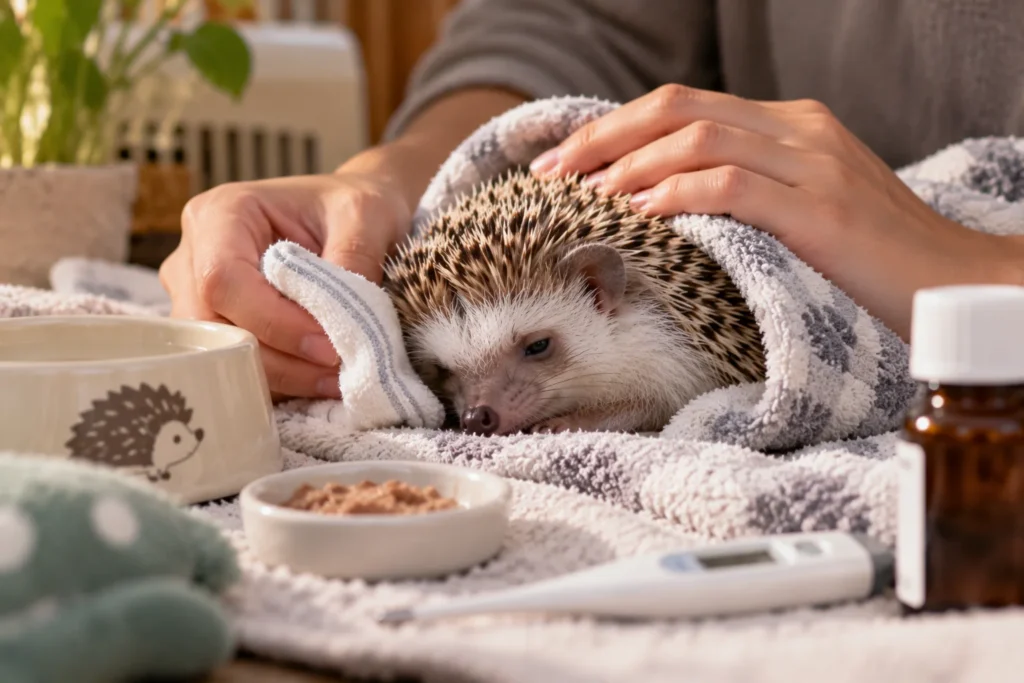
Hedgehogs can hide signs of illness, so owners should pay close attention to changes in their behaviour, appetite and appearance.
Contact a veterinarian if you notice:
- Constant scratching or quill loss
- Drooling or changes in eating habits
- Weight loss
- Limping
- Lumps, bumps or wounds
- Discharge from the eyes, nose, ears or genital area
- Bad smell from the mouth
When Is It an Emergency?
Seek veterinary care immediately if your hedgehog:
- Stops eating, drinking or passing faeces for 12 hours
- Develops a head tilt or has difficulty balancing or walking
- Has wheezing, sneezing or difficulty breathing
- Has difficulty urinating or blood in the urine
- Becomes very lethargic
- Develops bloating or diarrhoea
- Experiences a seizure
An exotic-pet veterinary check-up at least once a year can also help monitor your hedgehog’s health and identify potential problems early.
Key Takeaway
Hedgehogs may be small, but they have specific needs that should not be overlooked.
They spend much of the day asleep and are most active at night. They can also be noisy, have sharp quills and require a suitable environment that allows them to exercise and express their natural behaviours.
Providing a spacious enclosure, appropriate bedding, a safe exercise wheel, enrichment, a balanced diet, gentle handling and proper veterinary care can make a significant difference to your hedgehog’s wellbeing.
Hedgehogs can live for around 5–8 years or more, so owning one is a long-term commitment that requires responsible care.
Every hedgehog deserves a safe, comfortable and enriching environment where they can live according to their natural behaviours.
Visit Ocean Vet Clinic
Need advice about your ferret’s health or care?
Ocean Vet Clinic provides veterinary care for pets, including exotic pets such as ferrets.
📍 No 42, Jalan Pertama 1, Pusat Perdagangan Danga Utama, Skudai 81300, Johor Bahru
📞 +6011-2602 2884
🌐 www.oceanveterinary.com
📧 oceanvet.jb.office@gmail.com