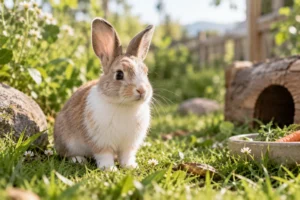
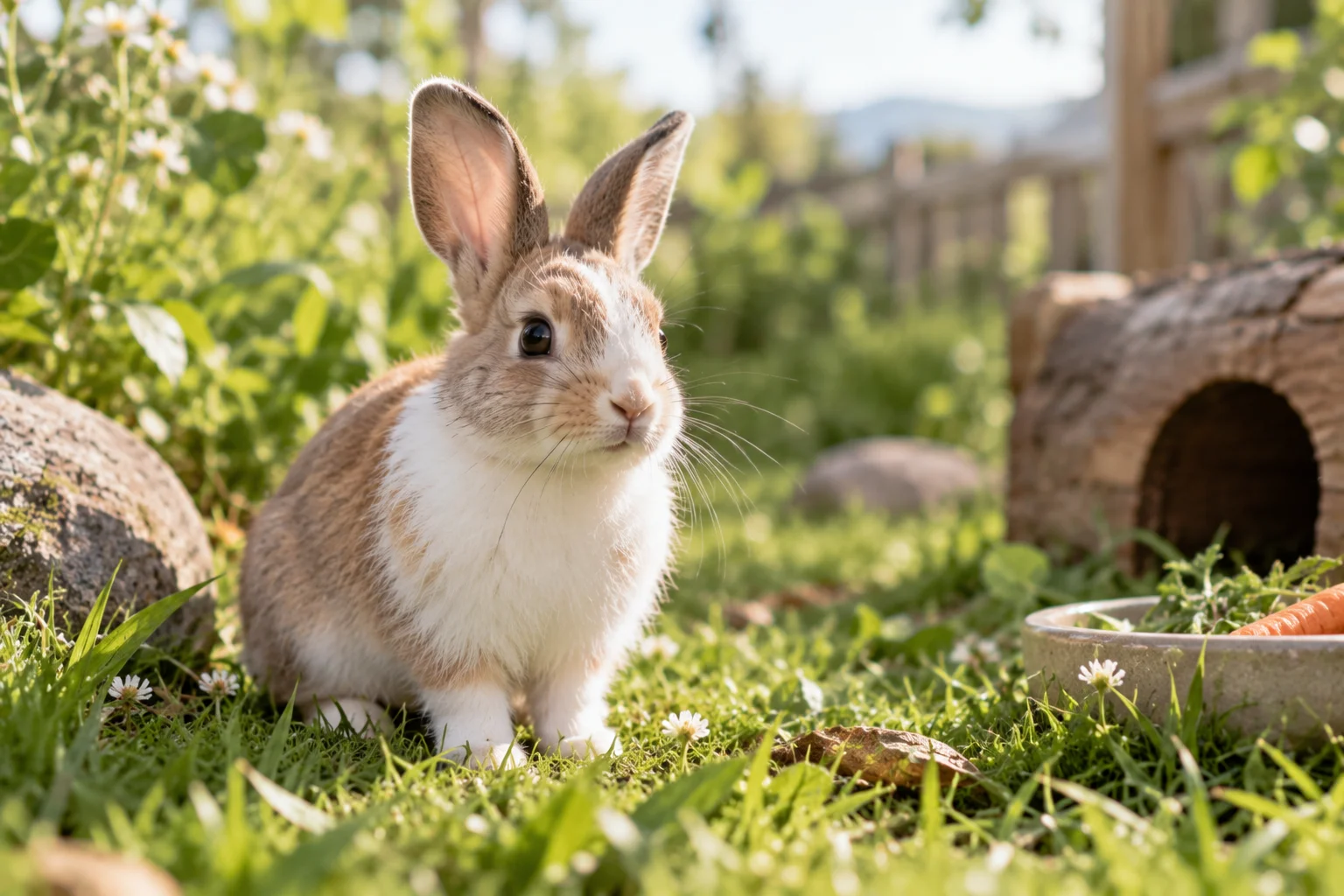
Rabbits are cute and adorable, but they require constant care and commitment. Providing the right housing, exercise, enrichment, nutrition, handling and medical care can help create a comfortable home for your rabbit.
Whether you are a first-time rabbit owner or considering getting one, understanding their natural behaviours and care requirements is an important first step.
Choosing the Right Enclosure
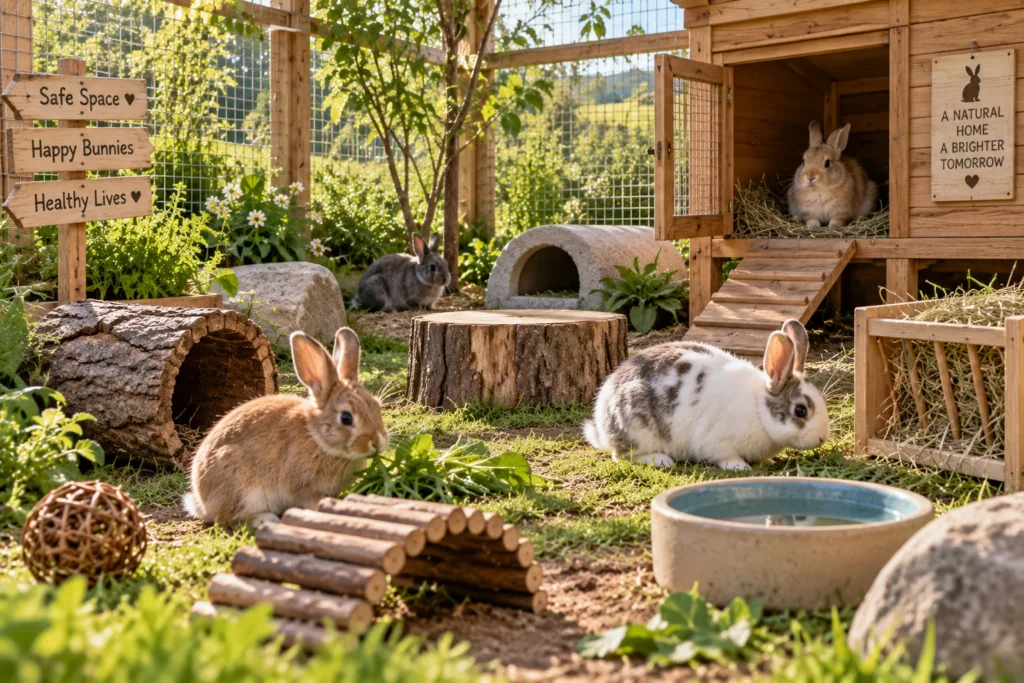
Rabbits need enough space to move comfortably, sit upright and express their natural behaviours.
The enclosure should be:
- At least 1 × 2 m
- At least 45 cm high so they can sit upright with their ears fully erect
- Well-ventilated and escape-proof
- Safe from predators such as cats and dogs
Provide a quiet, dark and easily accessible hutch where they can hide, sleep and eat.
Flooring and Bedding
Wire floors should be avoided because they can cause pressure sores on the feet. If unavoidable, cover them with newspaper and 1–2 inches of hay, straw or paper-based bedding.
Rabbits enjoy digging and burrowing, so deep bedding can encourage this normal behaviour. Avoid wood bedding such as cedar shavings, which can irritate their sensitive skin and respiratory system.
Exercise and Socialisation
Rabbits are very active animals and need to run and hop to help prevent obesity or bone problems.
Provide a safe space of at least 2 m × 3 m where they can run, jump, play and explore for a minimum of 4 hours per day.
Socialisation With Other Rabbits
Rabbits often enjoy living with at least one other rabbit, especially when raised together.
However, they can be territorial and may fight when first introduced. Introductions should be closely supervised and take place in neutral territory.
Rabbits may cohabit with some birds, but use caution with cats and dogs. Do not keep rabbits together with guinea pigs and chinchillas, as rabbits can transmit a deadly infection to them.
Enrichment and Natural Behaviours
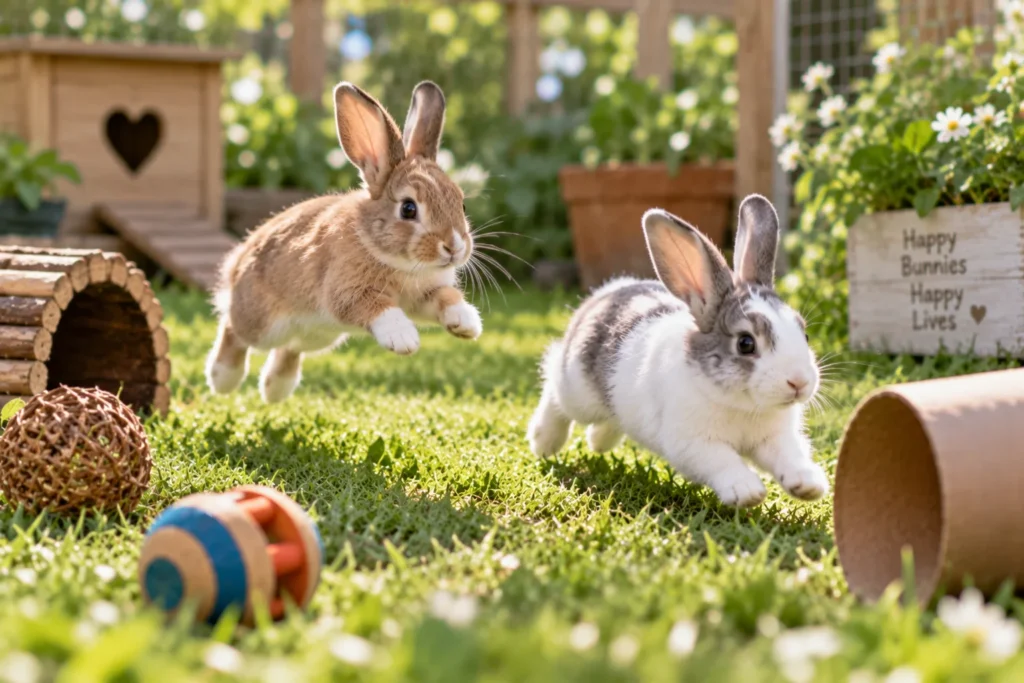
In the wild, rabbits spend much of their day searching for food. In captivity, they may spend only around 10–20% of their time eating, leaving much of the day without activities.
Without enough social interaction, movement or stimulation, rabbits can develop behavioural issues such as:
- Overgrooming
- Becoming mentally dull
- Running in circles
- Chewing on their cage
Enrichment Ideas
Try:
- Scattering food around the enclosure or placing it in shredded paper or recycled paper litter.
- Covering food bowls with paper or cardboard so they have to chew through it.
- Using several food bowls, with some containing food and some empty.
- Using feeding racks slightly higher so they have to stretch or reach.
- Providing safe toys.
Avoid toys with small parts that can be swallowed. Never use synthetic or cotton materials, as they can block the gut if eaten.
Proper Handling
Rabbits may break their spine if not handled properly. Never lift a rabbit by its ears.
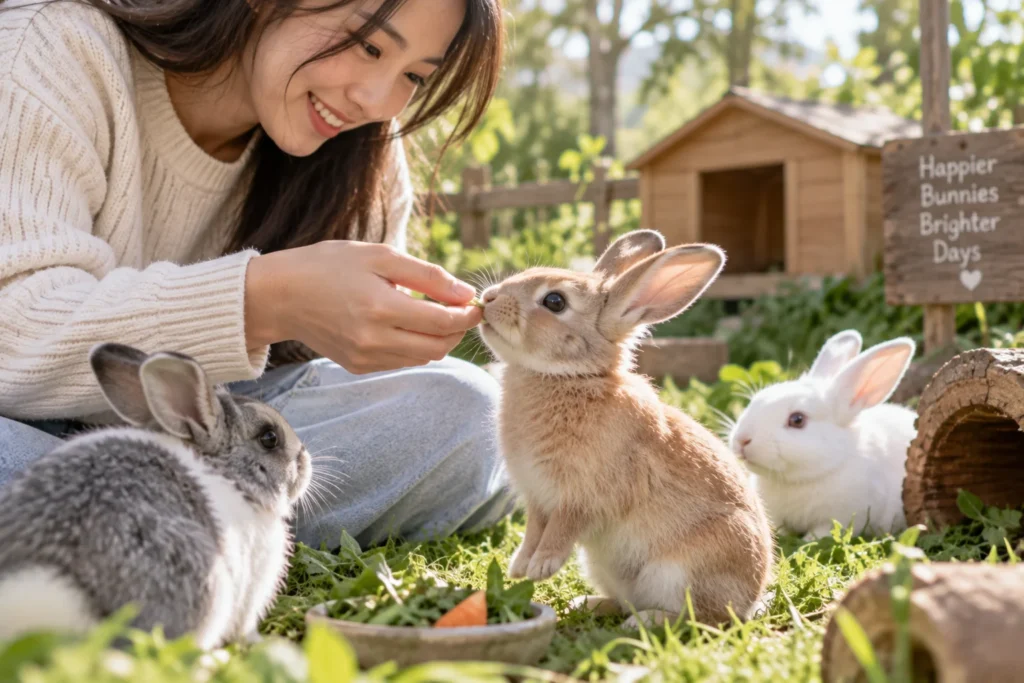
Approach calmly. Place one hand under the chest and the other supporting the back end and legs. Hold the rabbit firmly against your chest while supporting and controlling all four feet.
Rabbits have powerful hind legs but fragile backbones, so a strong kick while being mishandled can result in a serious back injury.
Feeding Your Rabbit a Balanced Diet
Rabbits are herbivores, and their balanced diet consists of several components.
Fresh Pasture Hay
Examples include Timothy and oat hay. Provide an unlimited amount.
Avoid lucerne/alfalfa hay, as its higher calcium content may be suitable for pregnant or growing animals but is otherwise a risk factor for bladder stones.
Fresh Green Grass
Provide an unlimited amount and rinse it to remove potential pollutants.
Rabbit Pellets
Use pellets specifically formulated for rabbits and limit intake to 1 dessertspoon per day.
Vegetables and Fruits
Examples include:
- Carrot
- Bell peppers
- Cucumber
- Celery
- Broccoli
- Apple
- Pear
These should make up only around 10% of daily food intake. Too much can contribute to problems such as dental disease and digestive issues.
Fresh and Clean Water
Provide an unlimited amount of fresh water, changed daily, in both a water bowl and bottle.
The source material notes that rabbits may spend more time drinking from a bottle but actually drink more from a bowl.
Understanding Caecotrophs
Rabbits reingest their own faeces, known as caecotrophs. These are soft, large droppings from the caecum that are rich in fatty acids and vitamins. This behaviour is normal and essential.
Food and water bowls should be flat, wide, easily washable and heavy enough to prevent tipping.
Recognising Signs of Illness
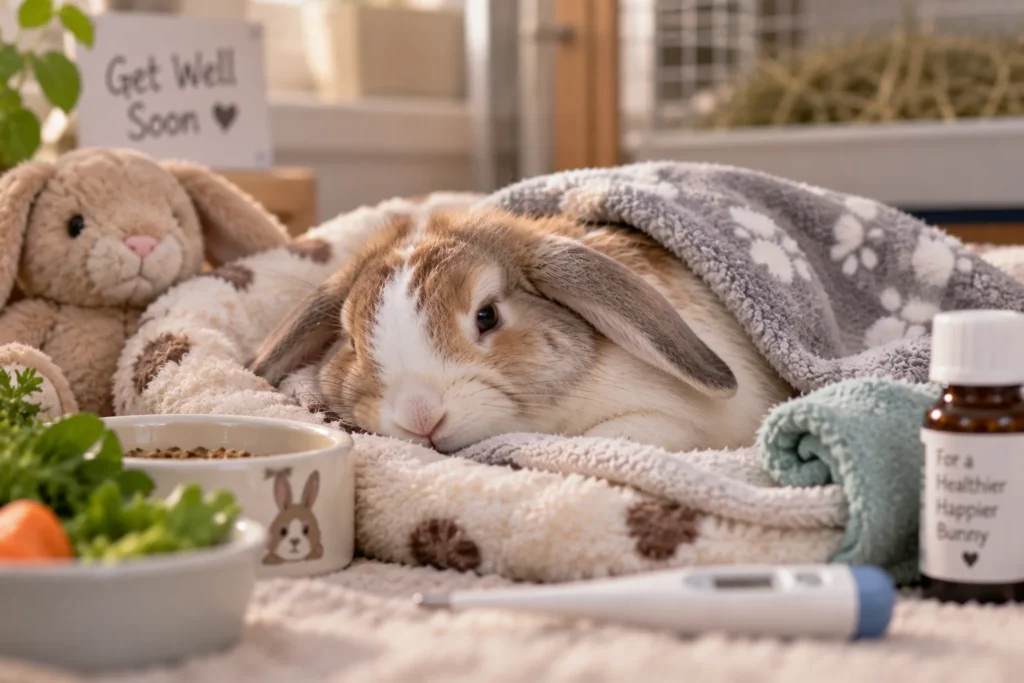
As a prey animal, rabbits may hide illness until it is fairly progressed.
Contact a rabbit veterinarian if your rabbit has:
- Constant scratching or fur loss
- Drooling or changes in food choices
- Weight loss
- Limping
- Lumps, bumps or wounds
- Discharge from the eyes, nose, ears or genitals
- Bad smell from the mouth
When Is It an Emergency?
Seek veterinary care immediately if your rabbit:
- Has not eaten, drunk or pooped for 12 hours
- Has a head tilt or difficulty balancing or walking
- Is wheezing, sneezing or having difficulty breathing
- Has difficulty urinating, cannot urinate, or has blood in the urine
- Is lethargic
- Has bloating or diarrhoea
- Experiences a seizure
Take your rabbit to an exotic veterinarian at least once a year for a check-up.
Key Takeaway
Contrary to popular belief, carrots are not a main part of a rabbit’s diet and should only be given as an occasional treat.
Rabbits have powerful hind legs but fragile backbones, so proper handling is essential.
Rabbits can live for 10+ years, making them a long-term commitment. Responsible ownership means being prepared to provide proper care throughout their lives.
Every rabbit deserves a safe, comfortable and enriching environment where they can move, explore and express their natural behaviours.
Visit Ocean Vet Clinic
Need advice about your ferret’s health or care?
Ocean Vet Clinic provides veterinary care for pets, including exotic pets such as ferrets.
📍 No 42, Jalan Pertama 1, Pusat Perdagangan Danga Utama, Skudai 81300, Johor Bahru
📞 +6011-2602 2884
🌐 www.oceanveterinary.com
📧 oceanvet.jb.office@gmail.com