Guinea pigs are cute and adorable, but they require specific care and attention to stay healthy and comfortable. Providing the right housing, nutrition, exercise, enrichment, grooming and handling can help create a suitable home for your pet guinea pig.
Whether you are a first-time guinea pig owner or considering getting one as a pet, understanding their basic needs is an important first step.
Choosing the Right Enclosure
Most cages sold in pet shops may be too small or unsuitable for guinea pigs. They need enough space to move around comfortably and explore.
For a pair of guinea pigs, the minimum recommended enclosure size is 120 × 60 cm, although the bigger, the better.
The enclosure should also be:
- At least 25 cm tall
- Well-ventilated
- Escape-proof
- Safe from predators such as cats and dogs
- Kept away from direct sunlight
Provide a quiet, dark and easily accessible hutch where your guinea pig can hide, sleep and eat.
Flooring and Bedding
Wire floors should be avoided as they may cause painful sores such as bumblefoot.
Instead, provide soft bedding such as:
- Fleece
- Towels
- Pee pads
- Newspaper with 1–2 inches of hay or paper-based bedding
If using fabric items, check regularly for loose threads, as these can pose a strangulation hazard.
Avoid pine or cedar shavings, as they may cause respiratory problems.
Exercise and Socialisation
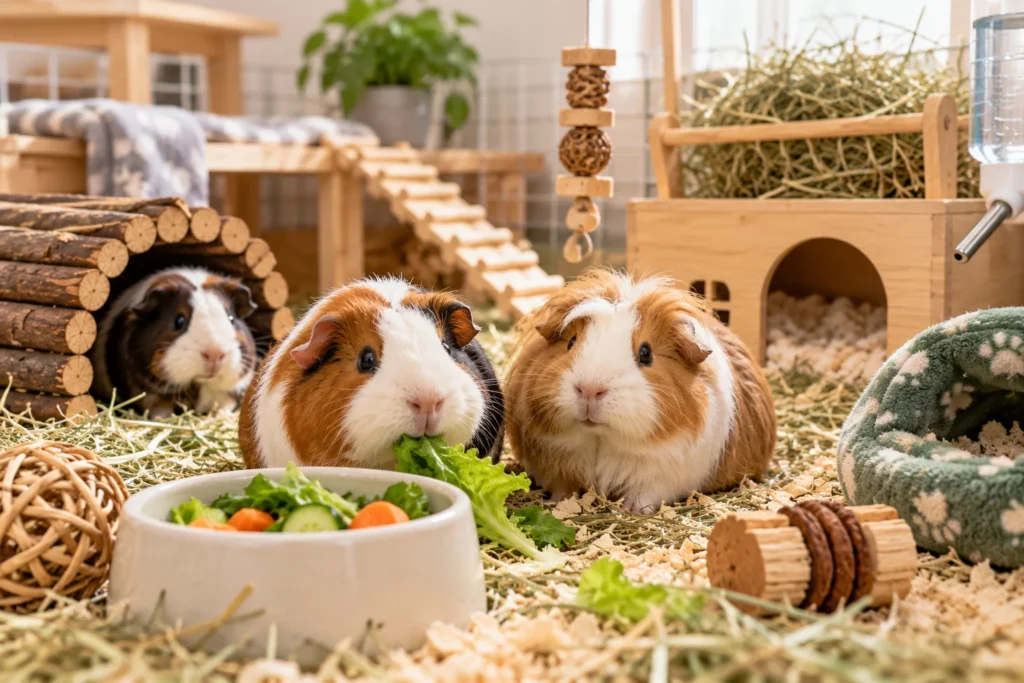
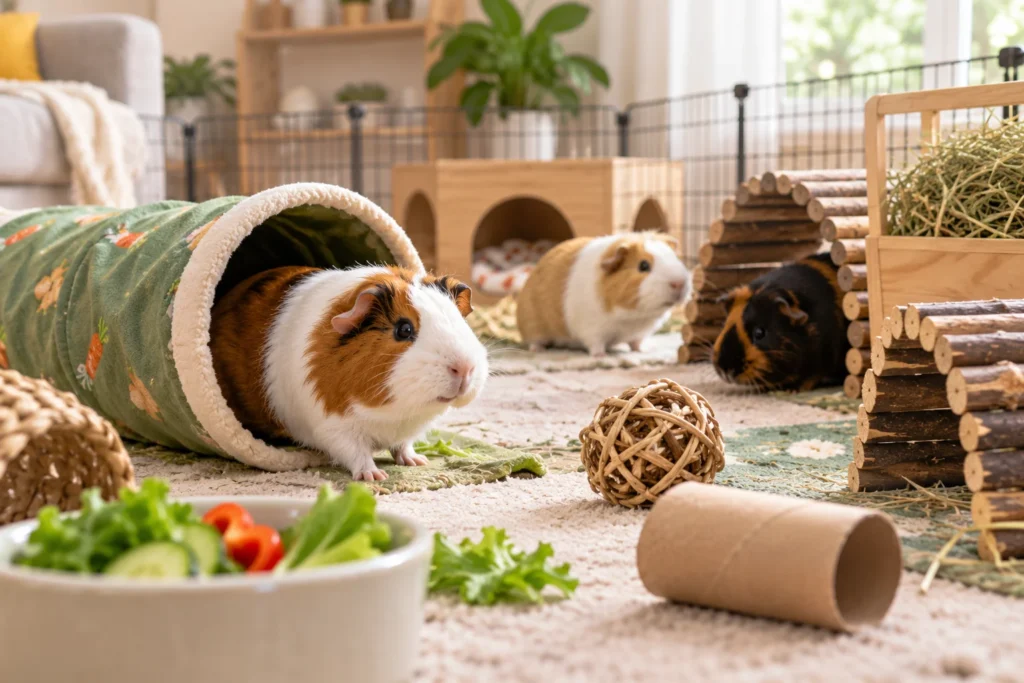
Guinea pigs love to explore outside of their cages and should be allowed out at least once a day under supervision.
This can be done in a designated safe zone in your home or in a playpen.
Make sure all wires, cords and other potentially dangerous items are kept outside of their chewing range.
Socialisation With Other Guinea Pigs
Guinea pigs are social creatures and generally do well in pairs.
They can still make good solo pets if they receive plenty of love, care and attention.
When building a bond with your guinea pig, start slowly and allow them to become comfortable with your presence. Offering treats from your hand and giving them gentle pets and lap time can help them become more comfortable around you.
Enrichment and Natural Behaviours
A mentally and physically stimulating environment is important for your guinea pig’s overall health.
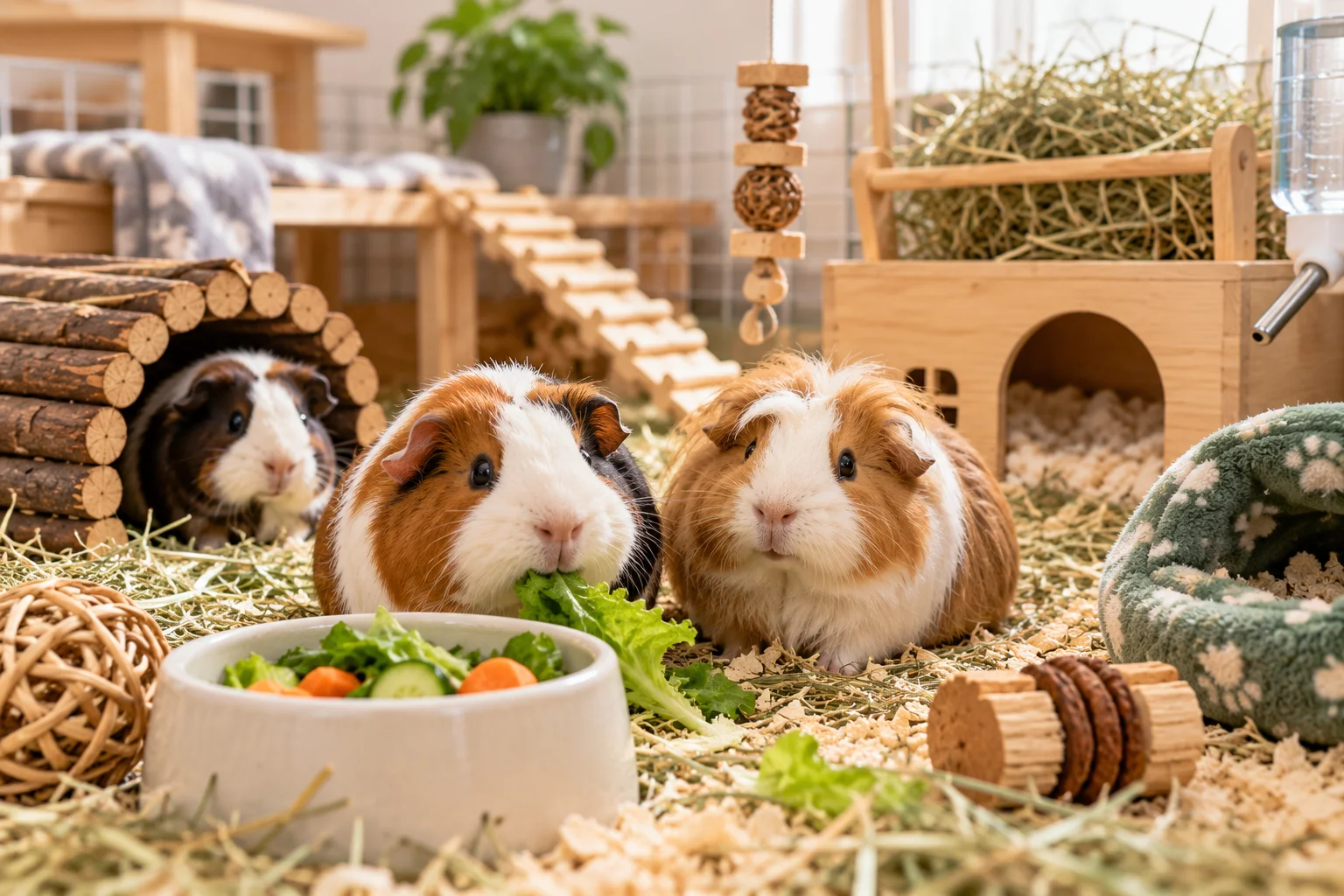
Adding enrichment such as snuffle mats, tunnels, foraging toys and hanging chews gives guinea pigs ways to stay busy, have fun and maintain their teeth and claws, both of which are constantly growing.
These enrichment items can be added to their enclosure and also used during supervised playtime outside of the cage.
Feeding Your Guinea Pig a Balanced Diet
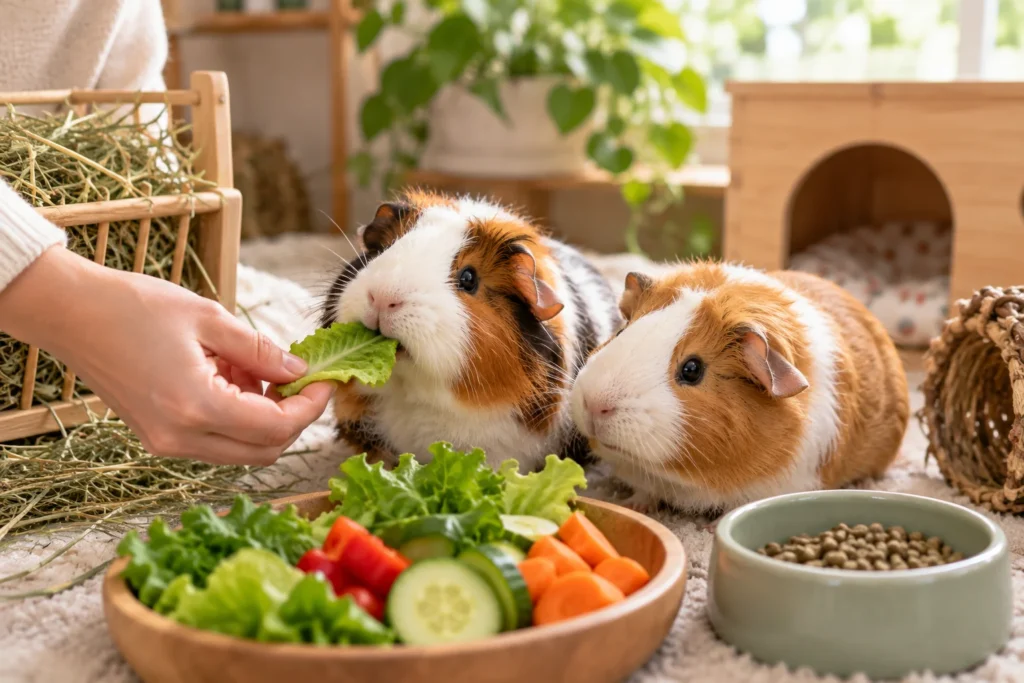
Guinea pigs are herbivores, and their balanced diet should include several important components.
Fresh Pasture Hay
Examples include Timothy, meadow and oat hay.
Provide an unlimited amount of hay.
Avoid lucerne/alfalfa hay, as it has a higher calcium content. While this may be suitable for pregnant or growing animals, it is otherwise a risk factor for bladder stones.
Fresh Green Grass
Provide an unlimited amount of fresh green grass.
Rinse the grass to remove any potential pollutants before offering it to your guinea pig.
Guinea Pig Pellets
Make sure the pellets are specifically formulated for guinea pigs.
Limit their intake to 1 dessertspoon per day.
Leafy Greens Rich in Vitamin C
Examples include:
- Romaine lettuce
- Bib lettuce
- Red leaf lettuce
These should be offered daily, making up around 10–20% of their daily food intake.
Vitamin C is particularly important because guinea pigs cannot make their own Vitamin C.
Other sources of Vitamin C include:
- Fruits, such as apples and grapes, limited to once or twice a week because of their high sugar content
- Vitamin C supplements
Fresh and Clean Water
Provide an unlimited amount of fresh and clean water.
Water bottles are preferred to water bowls because guinea pigs often chew on and play with water. Water bowls placed on the cage floor can also become easily contaminated with faeces and bedding.
Proper Handling
Guinea pigs can be easily frightened, so handling should be done calmly and gently.
How to Handle Your Guinea Pig Safely
- Approach slowly and speak softly.
- Allow them to sniff your hand before gently petting their head.
- Avoid touching their lower body, as this can startle them.
- When lifting, place one hand under their chest, behind the front legs.
- Place the other hand under their bum.
- Always support all four feet.
- Hold them close to your body so they feel secure and cannot jump or fall.
- A small towel or blanket can be used to wrap them for additional security.
- Hold them firmly, but never squeeze them.
Guinea pigs may squeal or squirm when being handled, but this can be normal until they become accustomed to being held.
Never hold a guinea pig upside down or on its back. As prey animals, these positions can be frightening and dangerous for them.
Grooming and Coat Care
Guinea pigs are generally low-maintenance when it comes to grooming, but they still require some basic care.
Nail Trimming
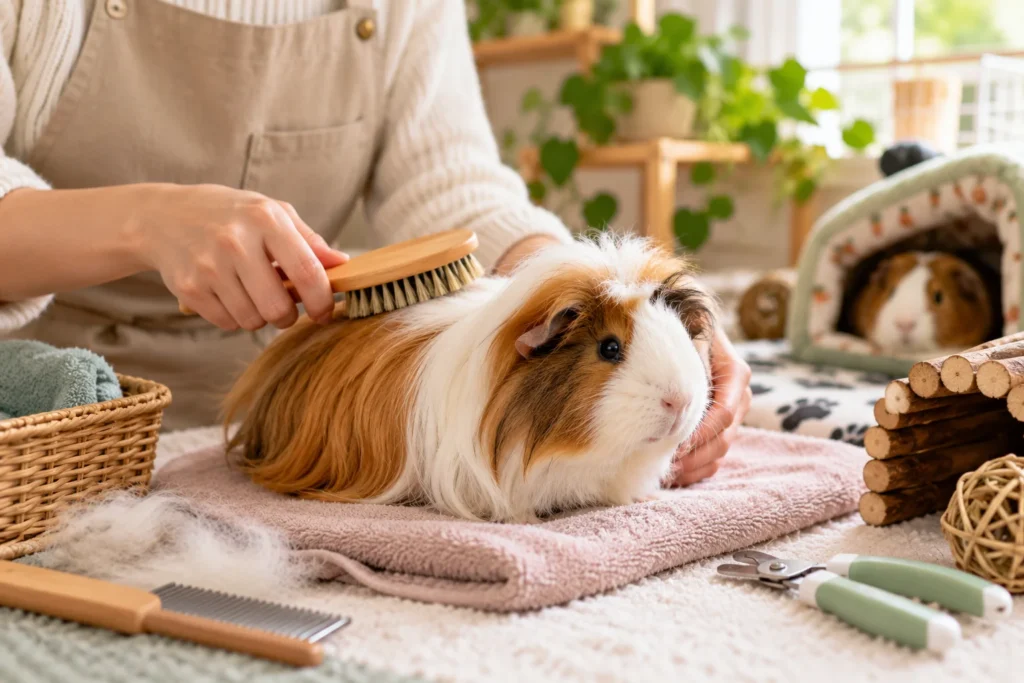
Nails can be trimmed at home using a small animal nail clipper, or you can take your guinea pig to a veterinarian for nail trimming.
Coat Brushing
Guinea pigs have different coat lengths, so brushing requirements can vary.
Short-coated guinea pigs can generally be brushed weekly, while guinea pigs with longer hair may need more frequent brushing to prevent matting.
A narrow-toothed comb can help catch and detangle their fine hair.
Bathing
Guinea pigs clean themselves and typically do not need a full bath unless they become covered in urine or faeces.
If this happens, a quick “butt bath”, where their hind end is shampooed and rinsed, is usually enough to clean them again.
Keeping the Housing Clean
Keeping the enclosure clean is important because guinea pigs are close to the ground, making them more likely to develop skin infections if their environment is dirty.
Daily Cleaning
Daily tasks include:
- Change hay, food and water daily.
- Change dirty and soiled bedding daily.
- Spot clean urine and faeces.
Regular cleaning helps maintain a cleaner and more comfortable environment for your guinea pig.
Recognising Signs of Illness
As a prey animal, guinea pigs may hide illness until it is fairly progressed.
Contact an exotic veterinarian right away if your guinea pig shows signs such as:
- Constant scratching or fur loss
- Drooling or changes in food choices
- Weight loss
- Limping
- Lumps, bumps or wounds
- Discharge from the eyes, nose, ears or genitals
- Bad smell from the mouth
When Is It an Emergency?
Seek veterinary care immediately if your guinea pig:
- Has not eaten, drunk or pooped for 12 hours
- Has a head tilt or difficulty balancing or walking
- Is wheezing, sneezing or having difficulty breathing
- Has difficulty urinating, cannot urinate, or has blood in the urine
- Is lethargic
- Has bloating or diarrhoea
- Experiences a seizure
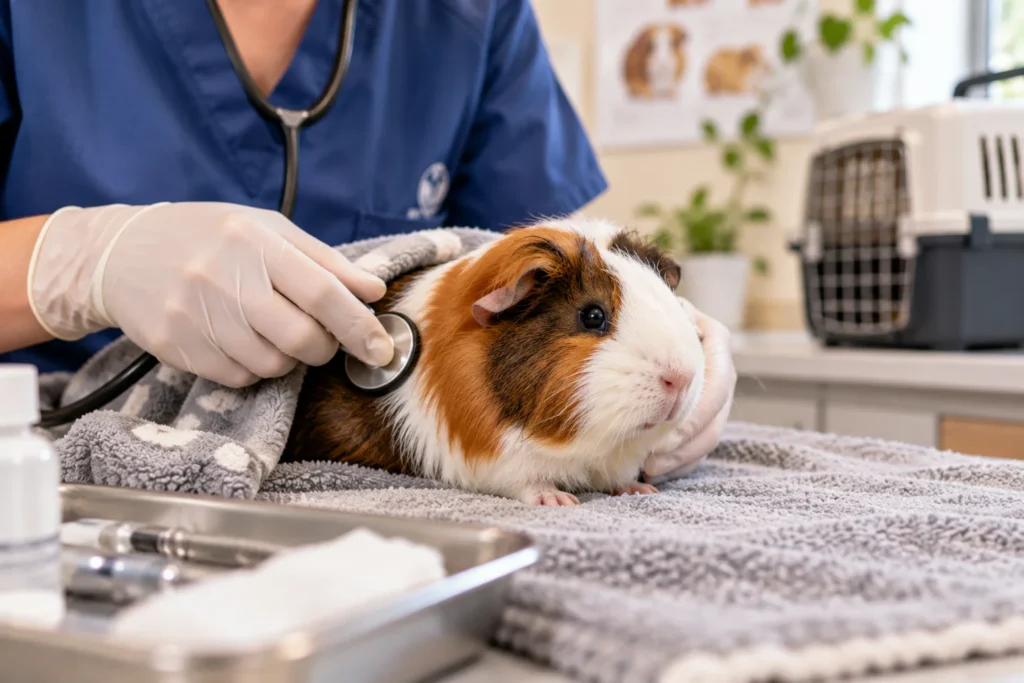
Take your guinea pig to an exotic veterinarian at least once a year to help identify health issues early and keep them in good condition.
Key Takeaway
Guinea pigs cannot make their own Vitamin C, so they need fresh vegetables, supplements or pellets containing Vitamin C every day to stay healthy.
They are also social creatures and do well in pairs, although they can still be good solo pets when given plenty of love, care and attention.
Guinea pigs can live for 8+ years, making them a long-term commitment. Responsible pet ownership means being prepared to provide them with proper care throughout their lives.
Every guinea pig deserves a safe, clean and enriching environment where they can stay healthy, active and comfortable.
Visit Ocean Vet Clinic
Need advice about your ferret’s health or care?
Ocean Vet Clinic provides veterinary care for pets, including exotic pets such as ferrets.
📍 No 42, Jalan Pertama 1, Pusat Perdagangan Danga Utama, Skudai 81300, Johor Bahru
📞 +6011-2602 2884
🌐 www.oceanveterinary.com
📧 oceanvet.jb.office@gmail.com